

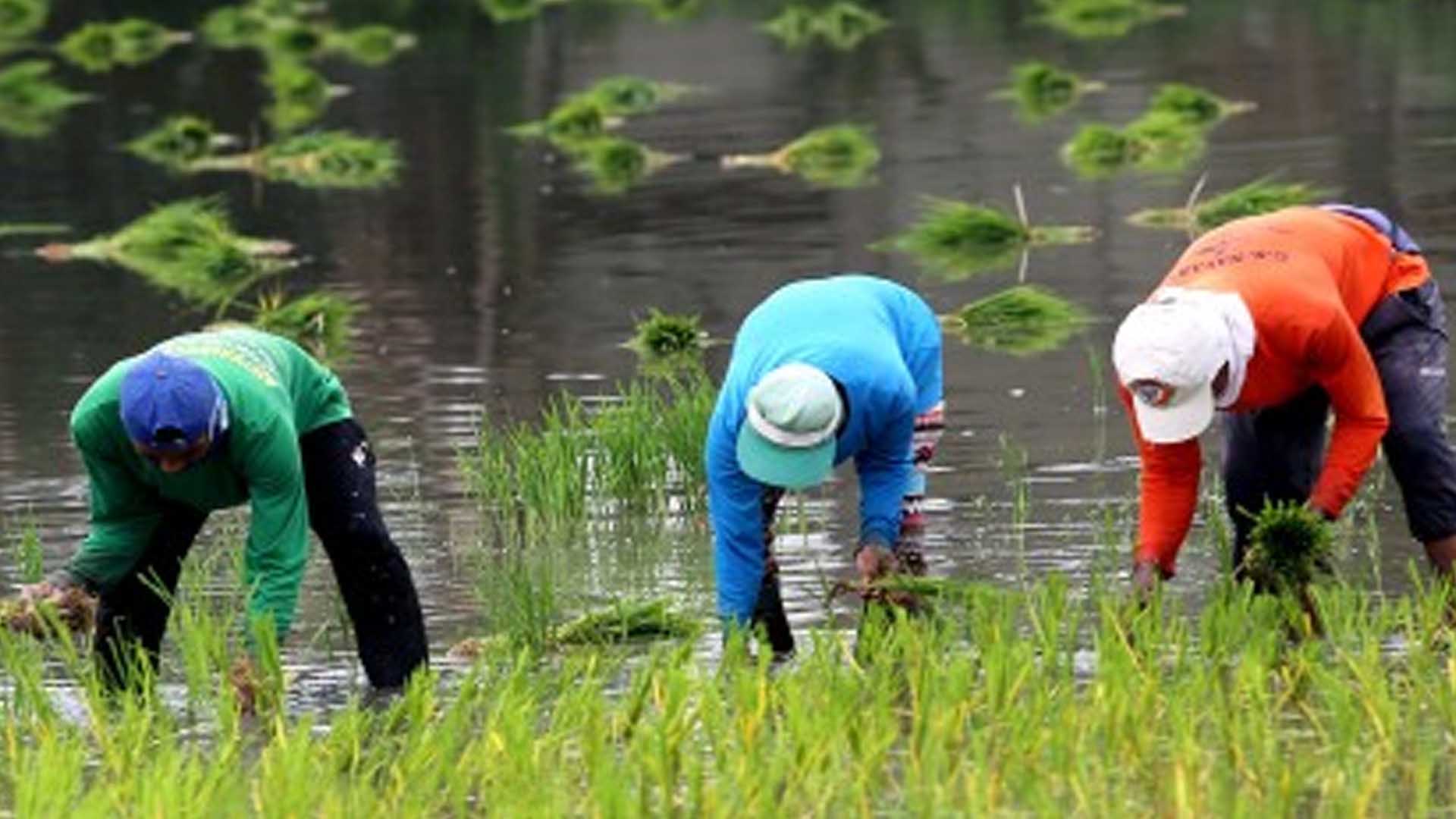







The Department of Agriculture (DA) on Monday allayed concerns about the possible effects of heavy rains amid the onset of the planting season for palay (unhusked rice).
DA spokesperson Assistant Secretary Arnel de Mesa explained that the rains are helping flood rice fields, which is necessary during planting.
“Wala naman tayong nakikita na malawakang pagbaha. So beneficial pa kasi ngayon taniman eh. Kailangan i-flood yung mga taniman natin (We are not seeing widespread flooding. So, it’s still beneficial because we are now planting. We need to flood these areas),” de Mesa said in an interview.
He explained that heavy rains help raise water levels in dams, which are essential for irrigation.
The southwest monsoon, enhanced by Typhoon Bising (international name Danas), dumped heavy rains over several parts of the country.
As of Monday, Angat Dam’s water level stood at 194.05 meters—above the 180-meter minimum operating level but below the 210-meter normal high.
“What’s more difficult is when flooding happens during harvest season, because you no longer need water, you need drainage,” de Mesa added.
He, however, assured necessary interventions in case the sector sustains agricultural damage.
“Our regional offices are ready to assist them, including seedlings and fertilizers,” he said.
Among the usual aid being distributed include agricultural inputs like rice, corn, and vegetable seedlings; drugs and biologics for livestock and poultry; PHP25,000 loanable amount for each farmer under the Survival and Recovery Loan (SURE) program of the Agricultural Credit Policy, payable for three years with zero interest; as well as the quick response fund. (PNA)