

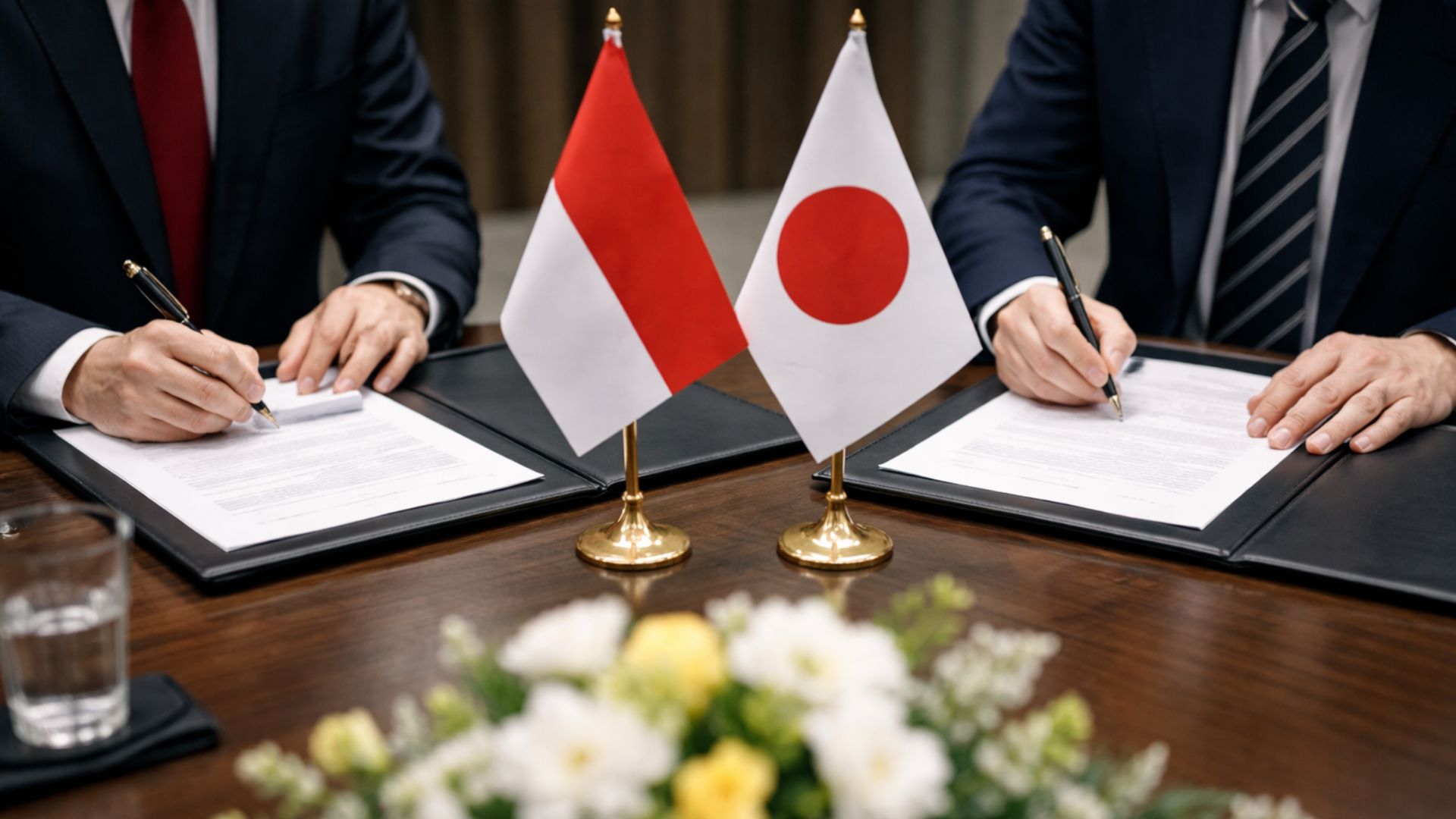







Indonesia and Japan formalized a bilateral cooperation agreement on critical minerals and nuclear energy on March 15, 2026, at a ministerial forum in Tokyo, deepening their strategic partnership across two sectors central to the global clean energy transition. The agreement positions Indonesia’s vast mineral reserves as a resource base for Japanese industry while advancing both countries’ commitments under the Asia Zero Emission Community framework.
Key Facts At A Glance
- Agreement signed: March 15, 2026, Tokyo
- Forum: Indo-Pacific Energy Security Ministerial and Business Forum (IPEM), co-hosted by Japan’s Ministry of Economy, Trade and Industry and the U.S. National Energy Dominance Council
- Signatories: Indonesia’s Minister of Energy and Mineral Resources Bahlil Lahadalia; Japan’s Minister of Economy, Trade and Industry Ryosei Akazawa
- Critical minerals scope: Strengthening global supply chain reliability and long-term stability
- Nuclear energy scope: Developing low-carbon technologies with high safety standards
- Indonesia’s mineral position: Holds the world’s largest nickel reserves; also holds deposits of bauxite, tin, copper, and rare earth elements
- AZEC projects referenced: Sarulla Geothermal Power Plant and Legok Nangka Waste-to-Energy Plant
- Framework: Cooperation falls under the Asia Zero Emission Community (AZEC), a Japan-led regional decarbonization initiative
Indonesia and Japan signed a Memorandum of Cooperation on March 15, 2026, covering critical minerals and nuclear energy, during a bilateral ministerial meeting held on the sidelines of the Indo-Pacific Energy Security Ministerial and Business Forum in Tokyo. The agreement was executed by Indonesia’s Minister of Energy and Mineral Resources Bahlil Lahadalia and Japan’s Minister of Economy, Trade and Industry Ryosei Akazawa.
The signing took place at a high-level forum co-hosted by Japan’s Ministry of Economy, Trade and Industry and the U.S. National Energy Dominance Council, convened on March 14 and 15, 2026. The IPEM is an invitation-only platform designed for ministerial-level announcements of energy deals, partnerships, and investment commitments across the Indo-Pacific region.
Critical Minerals
Under the agreement, cooperation in the critical minerals sector will center on strengthening the global supply chain for greater reliability and long-term stability, according to Indonesia’s Ministry of Energy and Mineral Resources.
Indonesia holds the world’s largest reserves of nickel as well as substantial deposits of bauxite, tin, copper, and rare earth elements — materials central to electric vehicle batteries, renewable energy systems, and advanced electronics. Minister Bahlil framed Indonesia’s position as an opportunity for Japanese industry. “We are very open and happy to ask the Japanese government and our Japanese business friends to manage our critical minerals in Indonesia,” he said in a statement issued on Sunday.
Japan is a major consumer of critical minerals for its manufacturing and automotive industries, and has been actively diversifying supply sources amid concerns over concentration risk in global mineral supply chains. Minister Akazawa underscored the urgency of cooperation in the current environment: “Amid the current global crisis, it is important for us to strengthen cooperation to safeguard energy security.”
Nuclear Energy
The nuclear energy component of the MoC focuses on developing low-carbon technologies with high safety standards. Japan’s engagement in this area is consistent with its broader commitment under the AZEC framework, through which it has pledged to share technical expertise in safety standards, regulatory transparency, and nuclear human resource development with partner countries in Southeast Asia.
Indonesia has identified nuclear power as part of its long-term energy strategy under Government Regulation No. 40/2025 on the National Energy Policy, which positions the technology as a tool for energy security and economic growth. Indonesia is among several Southeast Asian economies, alongside Malaysia, the Philippines, Thailand, and Vietnam, actively exploring nuclear energy options through the Nuclear Energy Cooperation Sub-Sector Network.
AZEC Projects And Broader Energy Cooperation
Both countries are expected to continue discussions on broader energy cooperation, including liquefied natural gas and coal supply chains. Existing projects under the AZEC framework, including the Sarulla Geothermal Power Plant in West Sumatra and the Legok Nangka Waste-to-Energy Plant in West Java, were reaffirmed as priority cooperation milestones. Minister Akazawa also welcomed Indonesia’s continued LNG exports to Japan and confirmed Japan’s commitment to the Legok Nangka project.
The agreement is the latest in a pattern of Japan-Indonesia bilateral energy engagements that have deepened since the AZEC framework was launched. Japan has been expanding strategic mineral partnerships across the Indo-Pacific to reduce dependence on single-source supply chains, particularly as global competition for battery and clean energy inputs has intensified.