

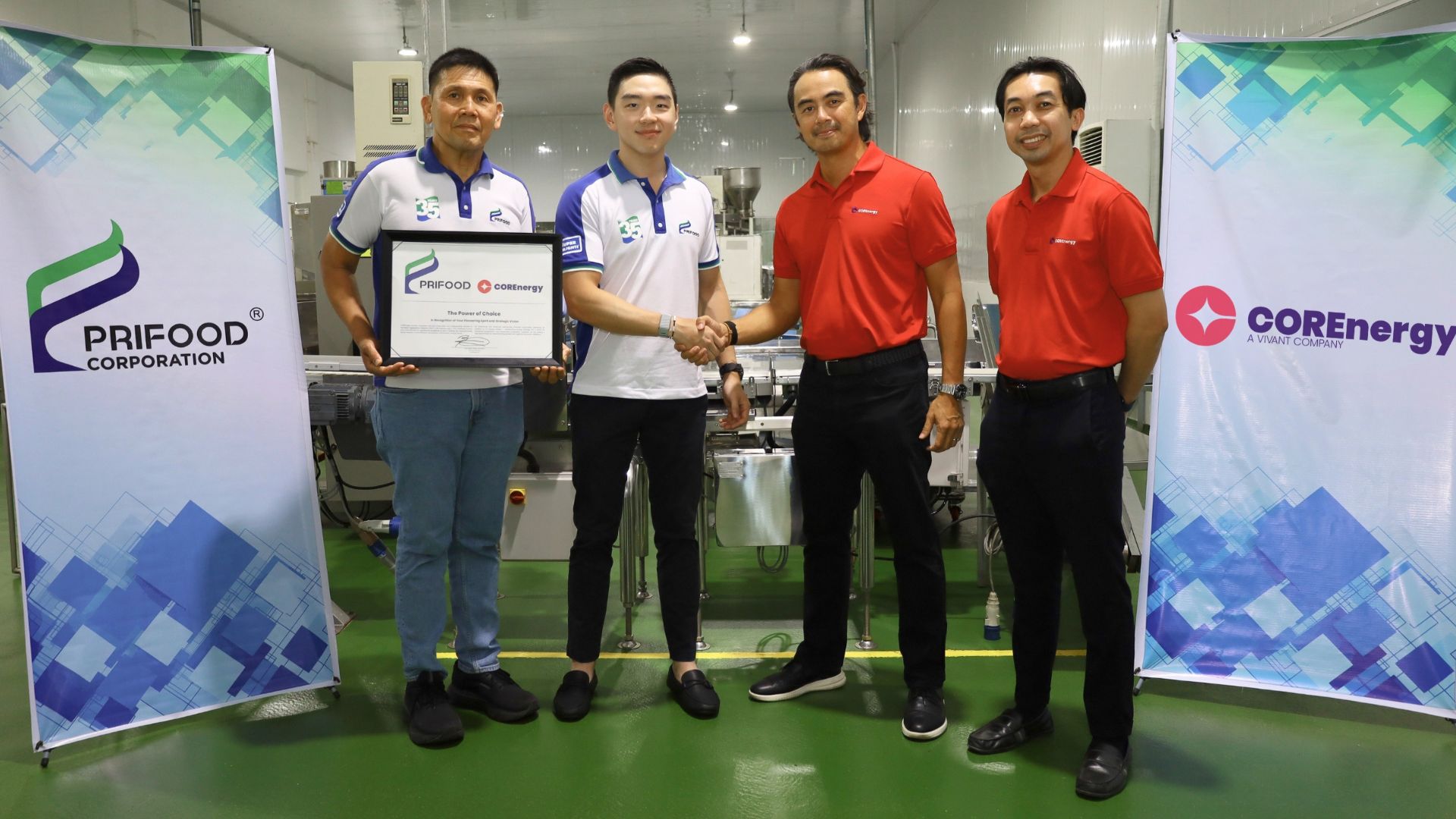







Cebu-based snack manufacturer Prifood Corporation has partnered with COREnergy, the retail electricity arm of Vivant Energy. to supply power to its manufacturing facilities across the Philippines, signaling a strategic shift toward more flexible and competitive energy sourcing.
The agreement covers Prifood’s two plants in Mandaue City, Cebu, representing a combined aggregate demand of up to 750 kW. By consolidating electricity requirements across its Cebu sites, Prifood gains stronger purchasing leverage and a more proactive approach to managing energy use across its expanding operations.
Prifood is among the first food manufacturers in the Visayas to formally engage a retail electricity supplier under the Retail Aggregation Program (RAP), an initiative led by the Department of Energy (DOE) and the Energy Regulatory Commission (ERC). The program allows contestable customers like manufacturers, commercial establishments, hospitality businesses, schools, to pool electricity demand and secure more competitive rates and tailored services from suppliers.
As a “gentailer,” COREnergy integrates generation and retail capabilities to deliver cost-efficient, end-to-end energy solutions tailored to customers’ operational requirements. This model allows companies like Prifood to take a more active role in optimizing energy consumption and aligning it with business performance goals.
Founded in 1990 in Mandaue, Prifood has grown into one of the country’s established snack food producers, with brands such as Super Crunch and Super Delights distributed nationwide. The company has steadily expanded beyond its Visayas base, building production hubs that support its widening market reach.
“For us, innovation goes beyond the product. It extends to how we run our operations,” said Enrico Yap, Assistant General Manager of Prifood Corporation. “Through this partnership, we are integrating more sustainable and smarter approaches to energy, ensuring that our growth remains both competitive and responsible.”
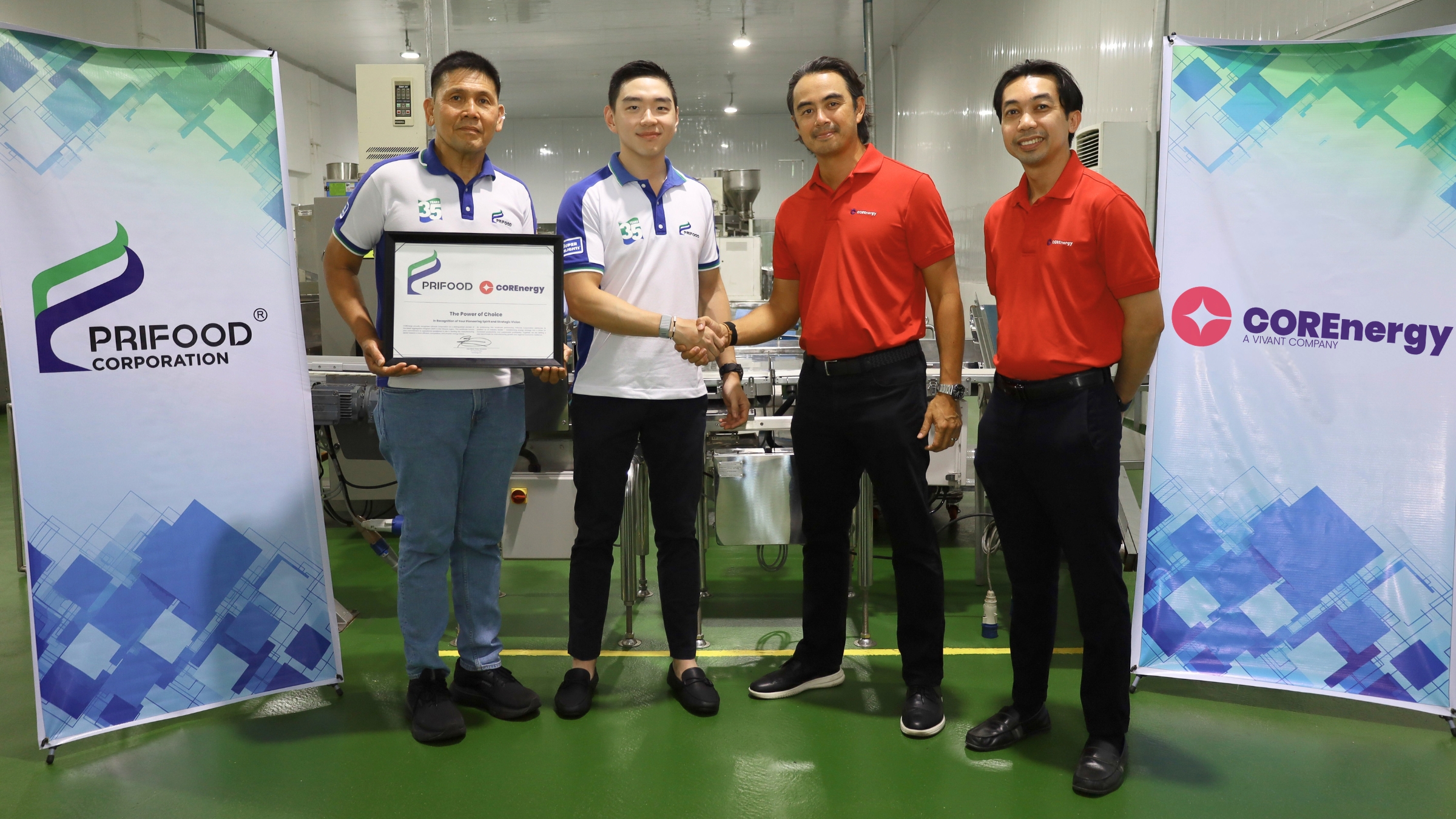
“At COREnergy, we were built to open doors for businesses to take control of how they use energy,” said Marko Sarmiento, COREnergy Retail and Sales Head. “Through the Power of Choice, we enable manufacturers like Prifood to align their energy strategies with their operational goals—driving productivity, profitability, and performance to support long-term growth.”
The partnership comes at a time when the Energy Regulatory Commission inked to lower the contestable threshold, allowing more businesses to participate in programs like RAP. What was once accessible only to large-scale industrial players is now within reach of a broader segment of enterprises, giving more companies the ability to optimize energy use and take advantage of the Power of Choice.