

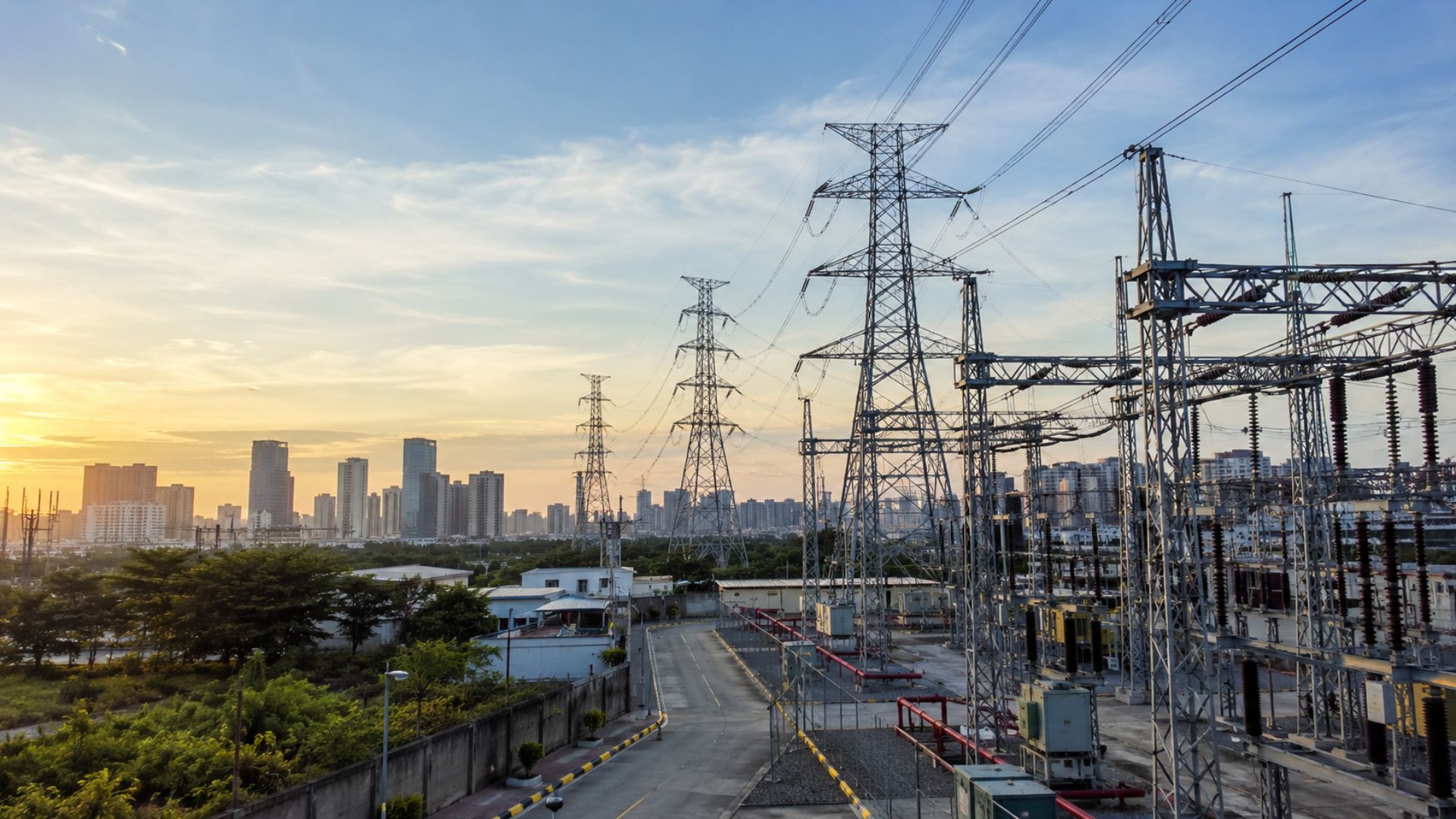







The Asian Development Bank cited the Philippines as one of the Asia-Pacific’s most active respondents to the 2026 global energy crisis while simultaneously announcing a USD 70 billion program to build cross-border power grids and digital infrastructure across the region, marking the bank’s largest single commitment to energy connectivity in its history.
Key Facts At A Glance
- ADB found the Philippines implemented seven of eight major policy response categories identified across Asia-Pacific economies
- Philippine diesel prices rose by nearly 120 percent between late February and mid-April 2026; gasoline rose by approximately 60 percent over the same period
- ADB revised its 2026 Philippine GDP growth forecast to 4.4 percent, a 0.9-percentage-point downgrade from its December estimate
- Philippine headline inflation reached 7.2 percent in April 2026, a three-year high, prompting a 25-basis-point Bangko Sentral ng Pilipinas rate hike
- ADB’s Pan-Asia Power Grid Initiative targets USD 50 billion for cross-border transmission infrastructure by 2035
- The initiative aims to integrate 20 gigawatts of renewable energy across borders and connect 22,000 circuit-kilometers of transmission lines
- ADB and Japan separately announced a joint initiative to support energy security and accelerate the energy transition for businesses across Asia and the Pacific
- ADB allocated approximately USD 25 million in initial funding specifically for the ASEAN Power Grid in mid-April 2026
The Asian Development Bank released a policy brief on April 29 identifying the Philippines as one of the most comprehensively responsive governments in the Asia-Pacific to the oil price shock triggered by the Strait of Hormuz closure. The brief examined eight major policy response categories across Asia-Pacific economies and found that the Philippines had deployed seven of the eight, spanning fuel subsidies, targeted cash transfers, transport sector support, staggered oil price adjustment coordination, demand reduction measures, supply-side procurement actions, and energy diversification initiatives.
ADB Country Director for the Philippines Andrew Jeffries said in a May 6 interview that the government’s early action and the scope of its response were notable. The Philippines was the first country in the region to declare a national energy emergency following the onset of the Middle East conflict, doing so on March 24 under Executive Order No. 110, which also established the Unified Package for Livelihoods, Industry, Food, and Transport framework. Jeffries described the subsidies deployed as targeted and directed toward those most vulnerable to the crisis.
The commendation came against a backdrop of severe price pressure. Philippine diesel prices rose by close to 120 percent between late February and mid-April 2026, peaking at approximately 120 pesos per liter, according to ADB data. Gasoline rose by around 60 percent over the same period. President Ferdinand R. Marcos Jr. signed Executive Order No. 114 in April, suspending excise taxes on liquefied petroleum gas and kerosene for three months. The Department of Energy separately coordinated staggered fuel price adjustments with oil companies to contain volatility. The Department of Energy also announced a fast-track procedure to connect 22 approved renewable power projects to the grid, targeting an additional 1,471 megawatts of generation capacity by April 2026.
Revised Growth And Inflation Outlook
The ADB simultaneously revised its macroeconomic projections for the Philippines and the wider region. The bank cut its 2026 Philippine GDP growth forecast to 4.4 percent, down 0.9 percentage points from its December estimate, citing the drag from the energy shock. Philippine inflation reached 7.2 percent in April 2026, a three-year high, driven by rising fuel and transport costs alongside food price pressures. The Bangko Sentral ng Pilipinas responded with a 25-basis-point interest rate hike, which Jeffries characterized as a measured move to stay ahead of inflation without over-tightening into a slowing economy.
For the broader Asia-Pacific region, ADB revised its 2026 growth outlook to 4.7 percent and its 2027 forecast to 4.8 percent, both lower than prior estimates of 5.1 percent. The bank warned that a worst-case scenario involving oil prices rising to approximately 155 dollars per barrel in mid-2026 and remaining elevated into 2027 could reduce cumulative GDP growth in developing Asia by 1.3 percentage points over 2026 and 2027, with inflation potentially accelerating to 5.2 percent this year from 3 percent in 2025. Oil prices are assumed to average approximately 96 dollars per barrel for 2026 under a reference scenario, compared with a pre-conflict average of 69 dollars.
PAN-ASIA Power Grid Initiative
Against this backdrop of energy crisis, ADB used its 59th Annual Meeting of the Board of Governors in Samarkand, Uzbekistan on May 3-6 to unveil the Pan-Asia Power Grid Initiative, a USD 50 billion program to build cross-border electricity infrastructure across Asia and the Pacific by 2035. ADB President Masato Kanda framed the initiative as a structural response to the vulnerabilities exposed by the current crisis and by rising electricity demand from data centers and artificial intelligence workloads. The bank expects to finance approximately half of the USD 50 billion from its own resources and raise the balance through cofinancing including private sector participation.
The initiative targets the construction and integration of cross-border transmission lines, substations, storage systems, and grid digitalization infrastructure. By 2035, ADB aims to integrate about 20 gigawatts of renewable energy across national borders, connect 22,000 circuit-kilometers of transmission lines, improve energy access for 200 million people, and reduce regional power sector emissions by 15 percent. Up to 10 million dollars in technical assistance will be allocated to align regulatory frameworks, develop common technical standards, and fund feasibility work for major interconnection projects. The initiative explicitly builds on existing subregional frameworks including the ASEAN Power Grid.
The ASEAN Power Grid component had already received a USD 25 million initial funding package, announced by ADB in mid-April, with contributions from Australia, Canada, Germany, the United Kingdom, and the European Union. That earlier announcement positioned the ASEAN Power Grid as a Southeast Asia-specific track within what has now become a continent-wide architecture. In parallel, ADB and Japan announced a joint initiative on May 4 to provide direct support for businesses and countries in the Asia-Pacific facing rising energy costs, with a combined focus on near-term relief and longer-term transition acceleration.
The overall USD 70 billion program encompasses both the Pan-Asia Power Grid Initiative and the Asia-Pacific Digital Highway, a USD 20 billion program to expand broadband and data infrastructure. ADB stated that energy and digital access are interdependent pillars of the region’s long-term growth and competitiveness.