

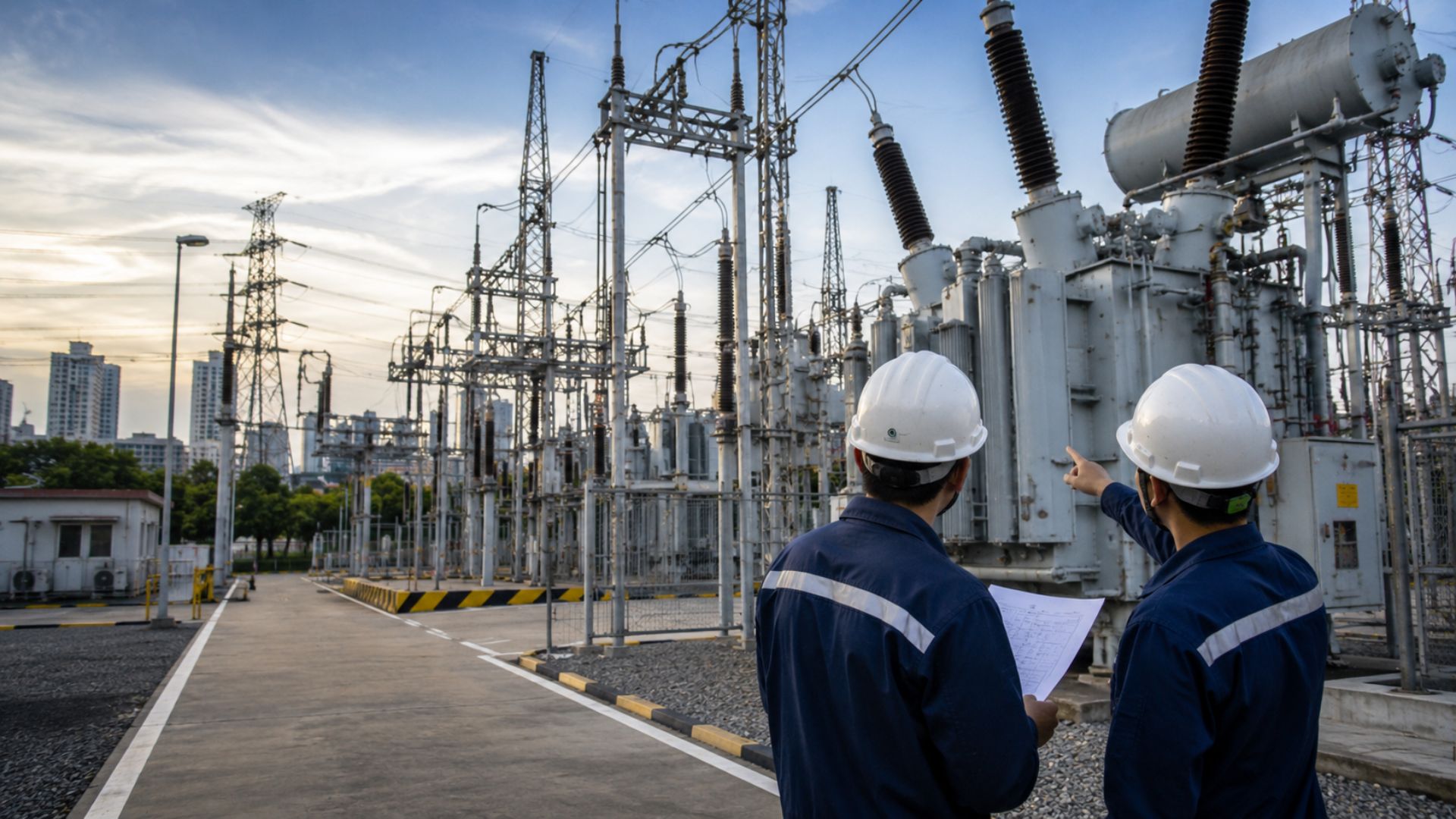







The Philippine Energy Regulatory Commission cleared a Manila Electric Company proposal to reduce the projected May 2026 generation charge increase by 58 percent, deploying an accelerated power supply agreement adjustment as a consumer buffer at the precise moment when Middle East-driven fuel costs were expected to fully register in electricity bills for the first time. The decision, issued on May 11, 2026, arrives amid a wider regulatory intervention sequence that has put the ERC at the center of the Philippines’ domestic energy price management response to the Hormuz supply disruption.
The ERC confirmed it had no objection to Meralco’s proposal to reduce the May 2026 generation charge increment from P1.0277 per kilowatt-hour to approximately P0.4350 per kilowatt-hour, a reduction of roughly 58 percent from the originally projected adjustment. Meralco proposed to achieve this by accelerating the implementation of tariff adjustments under its ERC-approved power supply agreements. Under this mechanism, PSA pricing schedules that would normally take effect over a longer period are front-loaded, partially offsetting the upward generation cost pressure before it reaches the monthly bill.
Key Facts At A Glance
- The ERC confirmed no objection to Meralco’s May 2026 generation charge reduction proposal on May 11, 2026
- Original projected generation charge increase: P1.0277 per kilowatt-hour
- Revised projected increase after PSA acceleration: approximately P0.4350 per kilowatt-hour, approximately 58% lower
- Cost drivers cited: elevated global fuel prices and sustained Philippine peso depreciation against the US dollar, linked to Middle East geopolitical tensions
- In April 2026, Meralco’s overall residential rate reached P14.3496 per kWh, up P0.5335 from March, driven primarily by peso depreciation which affected 99% of dollar-denominated First Gas gas plant costs and 44% of other PSAs
- April rate changes did not yet reflect Middle East fuel price impacts, as power was purchased before the conflict began; May was flagged as the first billing period where fuel cost passthrough was expected
- The ERC separately ordered Meralco on April 22, 2026 to refund P14.17 billion to consumers beginning in May over 12 months at a rate of P0.2511 per kilowatt-hour, compressed from an original 36-month schedule
- Meralco has also filed two additional AWAT refund applications totaling approximately P9 billion covering the periods July 2024 to December 2025, with initial ERC hearings scheduled for May 2026
- Meralco serves approximately eight million customers across Metro Manila, Rizal, Bulacan, Cavite, and parts of adjacent provinces
The Rate Trajectory
To understand the ERC’s May 11 intervention, the pricing trajectory since the start of 2026 is essential context. Meralco’s overall residential rate moved from P12.9508 per kilowatt-hour in January to P13.1734 in February, P13.8161 in March, and P14.3496 in April, a cumulative increase of P1.3988 per kilowatt-hour since January. The April increase alone was P0.5335 per kilowatt-hour, driven predominantly by the peso crossing the P60-to-the-dollar threshold during the March supply month for the first time since June 2022.
The peso depreciation mechanism is a structural feature of Meralco’s power supply portfolio. Natural gas-fired plants, principally the First Gas Sta. Rita and San Lorenzo facilities, account for approximately half of Meralco’s supply mix and carry near-total dollar denomination of their cost structures. The depreciation of the peso during March directly translated into a P1.2342 per kilowatt-hour increase in First Gas charges. The remaining 44 percent of dollar-denominated PSA costs added a further P0.1989 per kilowatt-hour increase. Meralco noted that it has been progressively negotiating peso-denominated capital recovery fees for newer post-EPIRA suppliers precisely to reduce this foreign exchange exposure.
Crucially, Meralco’s April announcement included a disclosure that the April rate changes had not yet captured the downstream fuel price impact of the Middle East conflict. Power used for April billing was purchased before the war began, insulating consumers from immediate passthrough. May was the first billing month in which fuel prices procured during the conflict period would be reflected in generation charges.
The PSA Acceleration Mechanism
Meralco’s proposal to reduce the May increase invokes the accelerated implementation of adjustments under ERC-approved PSAs. This mechanism does not involve renegotiation of supply contracts or regulatory price-setting in real time. Instead, it allows Meralco to front-load scheduled tariff revisions embedded in existing supply agreements, effectively drawing forward a future credit or adjustment to offset a near-term cost spike. The ERC’s confirmation that it has no objection to this approach signals regulatory comfort with using PSA scheduling flexibility as a short-term consumer protection tool.
The mechanism is notable because it operates without requiring new legislative authority, emergency rate-setting procedures, or government subsidy appropriation. It is an internal regulatory instrument — one that Meralco can propose and the ERC can clear within the existing framework of approved supply agreements. Whether sufficient PSA adjustment headroom exists to deploy the same tool in subsequent months depends on the remaining schedule of outstanding adjustments under each PSA.
The Broader ERC Intervention Sequence
The May 11 generation charge clearance is the third major ERC action within a compressed period targeted at reducing the Meralco bill impact on consumers. The sequence begins with the April 22, 2026 order accelerating the P14.17 billion AWAT refund. The AWAT mechanism is a regulatory true-up instrument that requires distribution utilities to reconcile actual collected revenues against the maximum allowable tariff. When a utility over-collects relative to the approved rate during a period when a formal rate reset was delayed, the difference must be returned to consumers.
In Meralco’s case, an initial refund of nearly P20 billion began in April 2025 at P0.1189 per kilowatt-hour over 36 months. As of February 2026, P14.17 billion remained unrefunded. The ERC, citing the need to frontload relief as Middle East-linked generation costs were expected to rise, ordered the remaining balance returned over 12 months instead, producing a higher average refund rate of P0.2511 per kilowatt-hour for most customers and approximately P0.4278 per kilowatt-hour for residential users. This refund line appears as “AWAT (Refund)/Collect” on monthly bills beginning in May 2026.
A third tranche is now in the pipeline. As of May 5, 2026, Meralco Senior Vice President for Regulatory Management Jose Ronald Valles confirmed that the utility has filed two additional AWAT applications — designated AWAT II and AWAT III — covering the periods January to June 2025 and July to December 2025, valued at P4.69 billion and P4.32 billion respectively, totaling approximately P9 billion. Initial ERC hearings on those applications were expected to begin in May. Meralco proposed distributing the P9 billion over 36 months, though the timeline remains subject to the regulator’s discretion. The ERC’s established pattern of compressing refund timelines in the current environment suggests the final approved schedule may be accelerated.
Structural Exposure And Policy Limits
The combination of regulatory tools being deployed points to a structural exposure that tariff management alone cannot resolve. Meralco’s supply mix, dominated by natural gas at approximately 50 percent, carries deep foreign exchange vulnerability through dollar-denominated contracts inherited from the post-EPIRA liberalization era. The peso’s sustained weakness against the dollar — driven in significant part by external account pressure from Middle East oil import costs — feeds directly into the generation charge through the contract cost structure, independent of actual spot fuel price movements.
The ERC’s actions contain the rate impact but do not resolve the underlying cost pressure. PSA acceleration draws on future adjustment headroom; the AWAT refund returns previously over-collected revenue. Neither creates new fiscal capacity to absorb higher fuel costs. If the peso remains weak and LNG and coal import costs rise as Middle East supply disruptions persist, the generation charge will face renewed upward pressure in June and beyond, with fewer pre-positioned regulatory buffers available to deploy.