

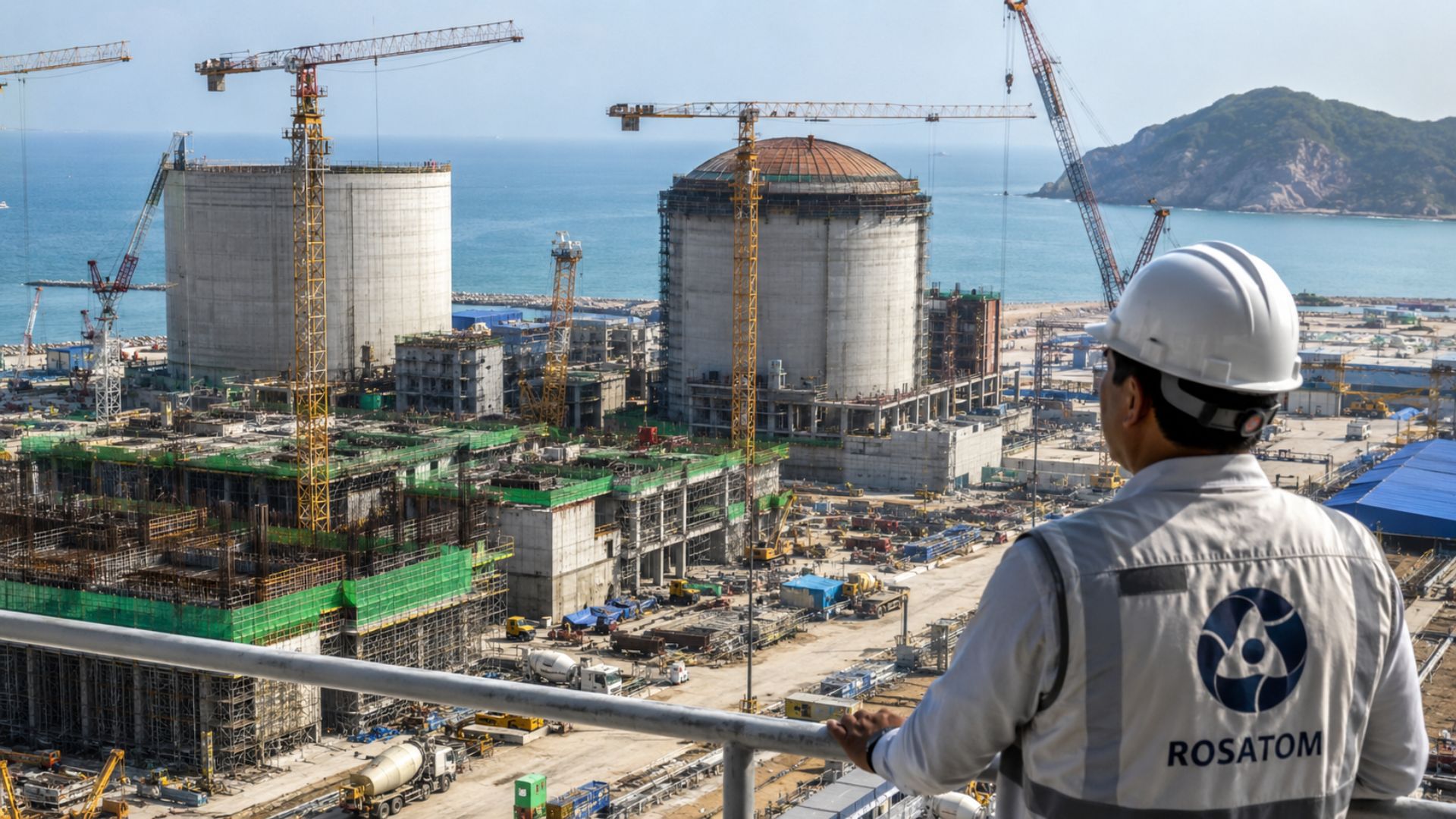







Southeast Asia’s push into nuclear power has crossed a threshold. What was for years a policy aspiration spread across feasibility studies and ministerial statements has in 2026 become a market of competing vendors, signed intergovernmental agreements, and multilateral development financing that no longer excludes reactors. Rosatom, GE Vernova, and Hitachi are all now actively engaged across the region. Vietnam has a construction framework. Indonesia has hosted the head of Rosatom at the presidential level. The Philippines has a licensing roadmap. And the Asian Development Bank, which banned nuclear financing for years, has lifted that ban.
The speed of change has been driven in part by the 2026 Middle East conflict, which disrupted oil and liquefied natural gas supply chains and sent fuel prices sharply higher across Southeast Asia. Countries whose power sectors depend heavily on imported fossil fuels have found nuclear’s argument for energy security independence considerably strengthened.
Key Facts At A Glance
- Vietnam signed an intergovernmental agreement with Russia for the 2,400 MW Ninh Thuan 1 plant on March 23, 2026, covering two Rosatom VVER-1200 reactors; Vietnam targets first nuclear generation before the end of 2031
- GE Vernova and Hitachi signed an MoU on March 14, 2026, to jointly market the BWRX-300 SMR (300 MWe) across Southeast Asia; signing occurred at the Indo-Pacific Energy Security Ministerial in Tokyo with U.S. and Japanese ministerial attendance
- Rosatom Director General Alexey Likhachev met Indonesian President Prabowo Subianto on May 12, 2026 in Jakarta; discussions covered large-scale reactors, SMRs, floating nuclear power units, and workforce training
- The Asian Development Bank lifted its longstanding ban on financing nuclear power plant construction in 2025, opening multilateral funding channels to regional nuclear programs
- The Philippines targets its first nuclear plant in operation by 2032 under a seven-phase licensing process administered by PhilAtom, established under Republic Act No. 12305 signed in September 2025
- The Philippines, Singapore, and Malaysia have each signed Section 123 Agreements with the United States enabling bilateral civil nuclear cooperation
- Indonesia plans two new nuclear power plants with operations targeted from 2032–2033
- Malaysia is evaluating nuclear as a potential power source specifically for data center load
Russia’s Vietnam Agreement
The most concrete project in the regional pipeline is Ninh Thuan 1. The intergovernmental agreement signed between Vietnam and Russia on March 23, 2026, during Prime Minister Pham Minh Chinh’s visit to Moscow, establishes the legal framework for the construction of two VVER-1200 pressurized water reactors at the Ninh Thuan site in southern Vietnam. The two units would carry a combined installed capacity of 2,400 MW. Rosatom described the deal as a “symbolic project” of the bilateral relationship. The original Ninh Thuan plant was agreed upon in 2009 and cancelled by the National Assembly in 2016 over cost and safety concerns; its revival reflects both the changed political context around energy security and the pressure from Middle East-linked fuel disruptions.
Separately, South Korean entities including KEPCO and Korea Eximbank signed a further agreement with PetroVietnam in April 2026 during a state visit by South Korean President Lee Jae-myung to explore Korean financing for Vietnam’s second nuclear plant at Ninh Thuan 2, where PetroVietnam is the designated investor.
The Ge Vernova-Hitachi Push
The March 14 MoU between GE Vernova and Hitachi to jointly market the BWRX-300 in Southeast Asia was the region’s first formal commitment from a U.S.-Japanese vendor consortium targeting the market as a unified commercial effort. The BWRX-300 is a 300 MWe water-cooled boiling water SMR with passive safety systems; its first unit is under construction at Ontario Power Generation’s Darlington site in Canada. The MoU was signed at the Indo-Pacific Energy Security Ministerial and Business Forum in Tokyo, attended by U.S. Secretary of the Interior Doug Burgum and Japan’s Ministry of Economy, Trade and Industry Minister Ryosei Akazawa, signaling government-level backing for the commercial campaign.
The two companies will collaborate through their joint ventures, GE Vernova Hitachi Nuclear Energy and Hitachi GE Vernova Nuclear Energy, and will seek to incorporate Japanese suppliers into a regional SMR supply chain.
Rosatom In Indonesia
Russia’s state nuclear corporation has pursued Indonesia in parallel with its Vietnam engagement. Rosatom Director General Alexey Likhachev’s May 12 visit to Jakarta included a meeting with President Prabowo Subianto and separate engagements with the Ministry of Energy and Mineral Resources, the National Research and Innovation Agency BRIN, and PT PLN. Rosatom presented a broad portfolio spanning gigawatt-scale conventional reactors, SMRs, and floating nuclear power units — the latter representing a possible solution to Indonesia’s archipelagic geography, which presents transmission and siting challenges that conventional land-based plants face in more concentrated form.
The meeting marks an escalation of a relationship that formally dates to a 2006 intergovernmental agreement on cooperation in the peaceful use of atomic energy. Indonesia has publicly set a target of bringing two nuclear plants online between 2032 and 2033, though no construction agreements have been signed.
The Philippines: Framework In Place
The Philippines has advanced the fastest on domestic regulatory architecture. Republic Act No. 12305, signed by President Marcos in September 2025, established PhilAtom as an independent nuclear safety regulator. A seven-phase licensing process has been codified. The Nuclear Energy Agency conducted a Nuclear Regulatory Framework Workshop in Manila in May 2026 in partnership with the Department of Energy. The government’s roadmap calls for 4.8 GW of nuclear capacity by 2050, with the first plant operational by 2032 and a second between 2036 and 2040.
The Philippines, along with Singapore and Malaysia, has signed a Section 123 Agreement with the United States, enabling direct civil nuclear technology cooperation, materials transfer, and equipment supply under non-proliferation safeguards.
ADB Financing Shift
The removal of the Asian Development Bank’s ban on nuclear financing in 2025, attributed in regional reporting to pressure from the Trump administration, materially changes the project finance environment for Southeast Asian nuclear programs. Multilateral development bank participation had historically been unavailable for nuclear projects, limiting host governments to bilateral vendor financing arrangements, primarily from Russia or China. The policy change opens the potential for project structures involving ADB capital alongside bilateral vendor financing, potentially altering the commercial terms available to governments in the Philippines, Indonesia, and Vietnam.