

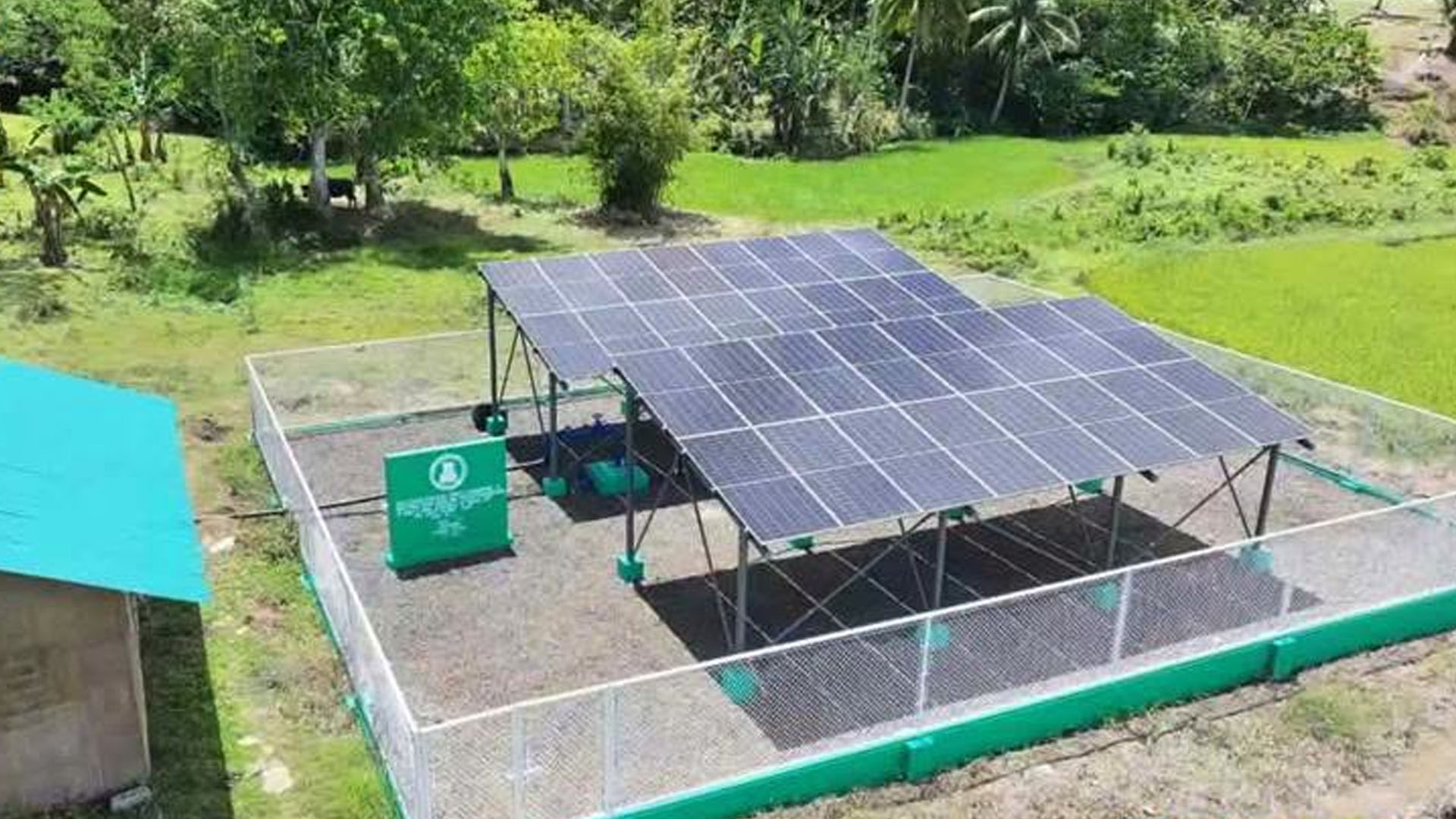







Rice farmers in Polangui, Albay have increased their harvest after the National Irrigation Administration (NIA) installed a Solar Pump Irrigation System (SPIS), giving them a more reliable water supply, particularly during the dry season.
In an interview on Friday, NIA-Bicol spokesperson Ma. Cleofe Baraero said Barangay Itaran farmers produced an average of 60 sacks of palay (unhusked rice) per hectare before the SPIS was installed.
“With the irrigation system providing a more reliable water supply, their harvest has increased to 90 to 100 sacks per hectare, improving productivity and creating opportunities for higher income,” she said.
Baraero said the project benefits 22 farmers cultivating 16 hectares under the Uswag Itaran Farmers Irrigators Association Inc.
Association president Arnel Reodique said the farmers previously relied on rainfall, leaving them vulnerable to water shortages during the dry season.
“Before the solar pump irrigation system was installed, many of us experienced problems because our farms were rain-fed. During the dry season, there were times when we had no water,” he said.
He thanked the NIA for the project, which has enabled them to irrigate their farms and eased concerns about water availability.
Landowner and farmer-beneficiary Danilo Tesorero voluntarily offered his property as the site of the irrigation facility to help provide the community’s farmers with reliable water access.
“Water is really needed, especially during the dry season. Farmers want to plant, but they cannot do so when there is no water,” Tesorero said.
He said he offered the land to help farmers who needed a reliable water source, emphasizing that the facility would benefit not only his farm but also other members of the community.
The SPIS forms part of government efforts to strengthen agricultural production by providing a dependable source of irrigation water amid changing weather conditions and prolonged dry spells.
Livelihood assistance for irrigators’ groups
Aside from irrigation infrastructure, the NIA also provided livelihood assistance to qualified irrigators’ associations, irrigation service cooperatives and agricultural cooperatives to strengthen their economic activities and improve the socioeconomic well-being of their members.
Baraero said the program aims to address associations’ and cooperatives’ limited access to production inputs, processing and marketing facilities, and other support services.
Under the program, eligible groups may receive needs-based livelihood assistance, including livestock, crop and fisheries production, farm inputs, tools, machinery, equipment, facilities, and land-related support to improve agricultural productivity.
A total of 57 irrigators’ associations qualified for the assistance under the program’s guidelines, with funding distributed in three batches.
The first batch covered 10 associations with an allocation of PHP1.8 million; the second covered 23 associations that received PHP3.85 million; and the third batch covered 24 associations and received PHP3.7 million, bringing the total assistance to PHP9.35 million.
“The livelihood interventions are intended to strengthen farmers’ organizations, expand income-generating opportunities, and promote the long-term sustainability of agricultural communities,” Baraero said.
Through irrigation infrastructure and complementary livelihood support, the NIA seeks to improve farm productivity, expand farmers’ income opportunities, and contribute to inclusive growth and poverty reduction in rural communities. (PNA)