

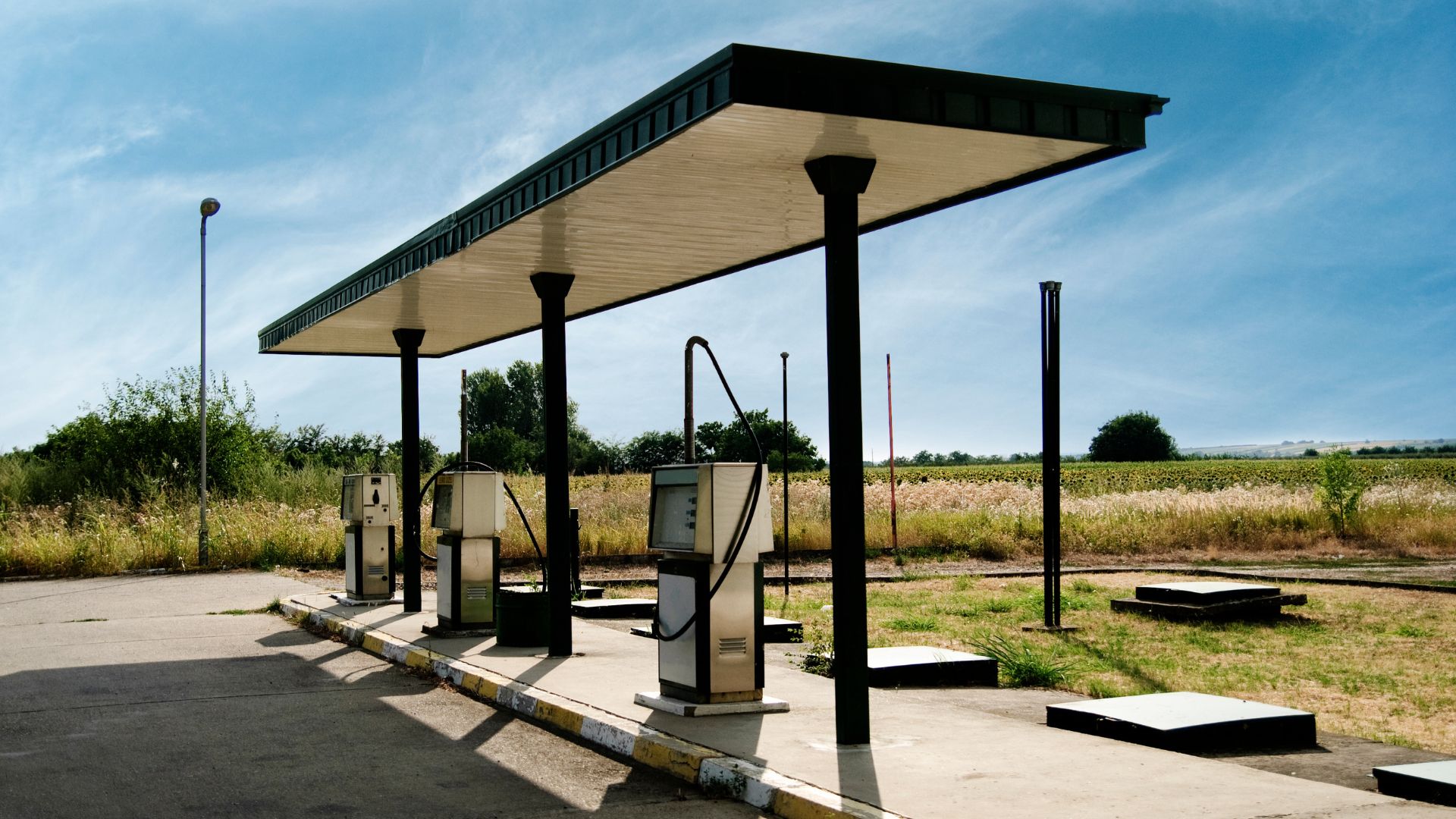







The municipality of Bongao in Tawi-Tawi, the southernmost province in the Philippines, declared a state of local emergency on April 1, 2026 after its two gasoline stations ran dry of both diesel and gasoline, stranding transport operators, shutting down fishing livelihoods, and forcing local government to reserve its remaining fuel stocks exclusively for essential services.
Key Facts At A Glance
- Executive Order No. 22, Series of 2026 was signed by Mayor Jasper Que on April 1, 2026, declaring a state of local emergency
- Both of Bongao’s gasoline stations had run out of diesel and gasoline as of the declaration date
- Gasoline was being sold in bottles at ₱140 to ₱150 per liter on April 1, up from ₱95 the prior week
- Tawi-Tawi sources most of its fuel from Sabah, Malaysia, transported via small wooden watercraft — bypassing the Philippines’ lone refinery in Bataan, Luzon
- The municipality has no permanent fuel depot; suppliers store fuel in drums
- The congressional office of Tawi-Tawi’s lone district announced a ₱5,000 fuel subsidy for at least 1,500 tricycle drivers, to be distributed as cash aid in the absence of available fuel
- Bongao implemented a four-day workweek starting the week of April 1
- The declaration authorizes the use of local calamity funds and emergency response measures
Supply Chain Failure At The Margins
Bongao sits at the southern tip of Tawi-Tawi Island, roughly 1,000 kilometers from Manila and separated from the country’s only operating crude oil refinery — Petron Corporation’s facility in Bataan, Luzon — by a sprawling archipelago. The distance alone makes conventional fuel supply chains expensive and slow. For decades, the municipality has operated on an informal cross-border supply arrangement: diesel and gasoline sourced from Sandakan and Sabah, Malaysia, transported across the Sulu Sea on small wooden watercraft. Retail diesel in Tawi-Tawi had historically cost around ₱95 per liter, substantially below the national average, precisely because of this proximity to Sabah’s distribution network rather than dependence on fuel routed down from Luzon.
That arrangement became the municipality’s undoing when the global energy crisis stemming from the effective closure of the Strait of Hormuz in late February 2026 tightened supply across the entire region. Malaysia, facing its own rising domestic fuel costs, is still managing supply continuity; Malaysian Prime Minister Anwar Ibrahim had assured the public in mid-March that subsidized domestic fuel prices would be maintained for the near term. But the informal cross-border trade that Tawi-Tawi depended upon — small-scale, uncontracted, and sensitive to any tightening of regional supply — collapsed before formal rationing measures even took effect. By late March, gasoline was already being sold in bottles on the roadside in Bongao at ₱95 per liter. By April 1, that price had surged to ₱140 to ₱150 per liter — a more than 50 percent increase in under a week — before supply dried up entirely.
The Declaration And Its Limits
Mayor Jasper Que’s Executive Order No. 22 cites the shortage of diesel and gasoline as due to the “unavailability of supply sources.” The language is precise: the problem is not price alone but the physical absence of fuel reaching the municipality. The order identifies small-scale fisherfolk, daily wage earners, and transport operators as the sectors bearing the greatest burden. Fishing is the primary livelihood in Tawi-Tawi; the province’s coastal communities depend on motorized boats for both income and food access. With gasoline stations closed and drum-based reserves exhausted, those boats are stationary.
The declaration empowers the local government to undertake emergency response measures and authorizes the use of local calamity funds, but publicly available reporting as of April 6 indicated that no specific alternative supply arrangement had yet been announced. Mayor Que appealed directly to major oil companies in Zamboanga City — the nearest major supply hub on the Mindanao mainland — to allow the municipality to purchase fuel in drums. The congressional office of Tawi-Tawi’s lone district announced a ₱5,000 cash subsidy for at least 1,500 registered tricycle drivers, acknowledging that without fuel available to purchase, financial assistance was the only immediately deliverable form of relief.
Bongao Within The National Emergency
The Bongao declaration came one week after President Ferdinand Marcos Jr. signed Executive Order No. 110 on March 24, placing the entire Philippines under a state of national energy emergency — the first such national declaration anywhere in the world in the current crisis. At that point, the Department of Energy reported the country held an average of 45 days of oil supply, down from 55 to 57 days at the start of the Iran conflict in late February. Jet fuel and LPG reserves were estimated at 39 days and 24 days respectively.
The national emergency framework empowers the government to crack down on hoarding and profiteering, fast-track procurement, and mobilize state-owned entities for supply response. The Department of Budget and Management released ₱20 billion from the Malampaya gas fund to the Department of Energy on March 25 to secure emergency fuel procurement. Petron Corporation ordered 700,000 barrels of crude from Russia, utilizing a 30-day US sanctions waiver for Russian petroleum products already at sea. The government was also in talks with China, India, and Russia for alternative supply. For Bongao, however, the speed and geography of these national measures created an asymmetry: nationally-coordinated oil procurement flows through Manila and Luzon, while communities at the archipelago’s periphery depend on informal and regional supply chains that failed faster and with less institutional cushion.
Bongao was not alone in this. Ajuy town in Iloilo Province also declared a state of calamity during the same period, citing fuel shortages affecting healthcare, water supply, education, and livelihoods in its island communities. Sorsogon Province in the Bicol region had been the first Philippine province to declare a state of calamity, doing so over rising petroleum prices in late March.
A Structural Exposure
The Bongao situation surfaces a structural feature of Philippine energy geography that the national emergency framework does not yet directly address. The country’s single operating refinery in Bataan processes crude primarily for markets in Luzon and nearby Visayas; the Mindanao region and especially remote island provinces have long relied on a combination of fuel barged from Luzon and, in Tawi-Tawi’s case, cross-border sourcing from Sabah. The Philippines holds no formal strategic petroleum reserve in the conventional sense — reserves are held in privately owned commercial inventories, estimated at 45 to 60 days nationally but distributed unevenly across geography. Remote communities have materially shorter effective buffers than national averages suggest.
As of the dates covered in this report, Bongao’s local government had received no confirmed emergency fuel delivery, and details of any national-level intervention specific to Tawi-Tawi were not publicly available.