

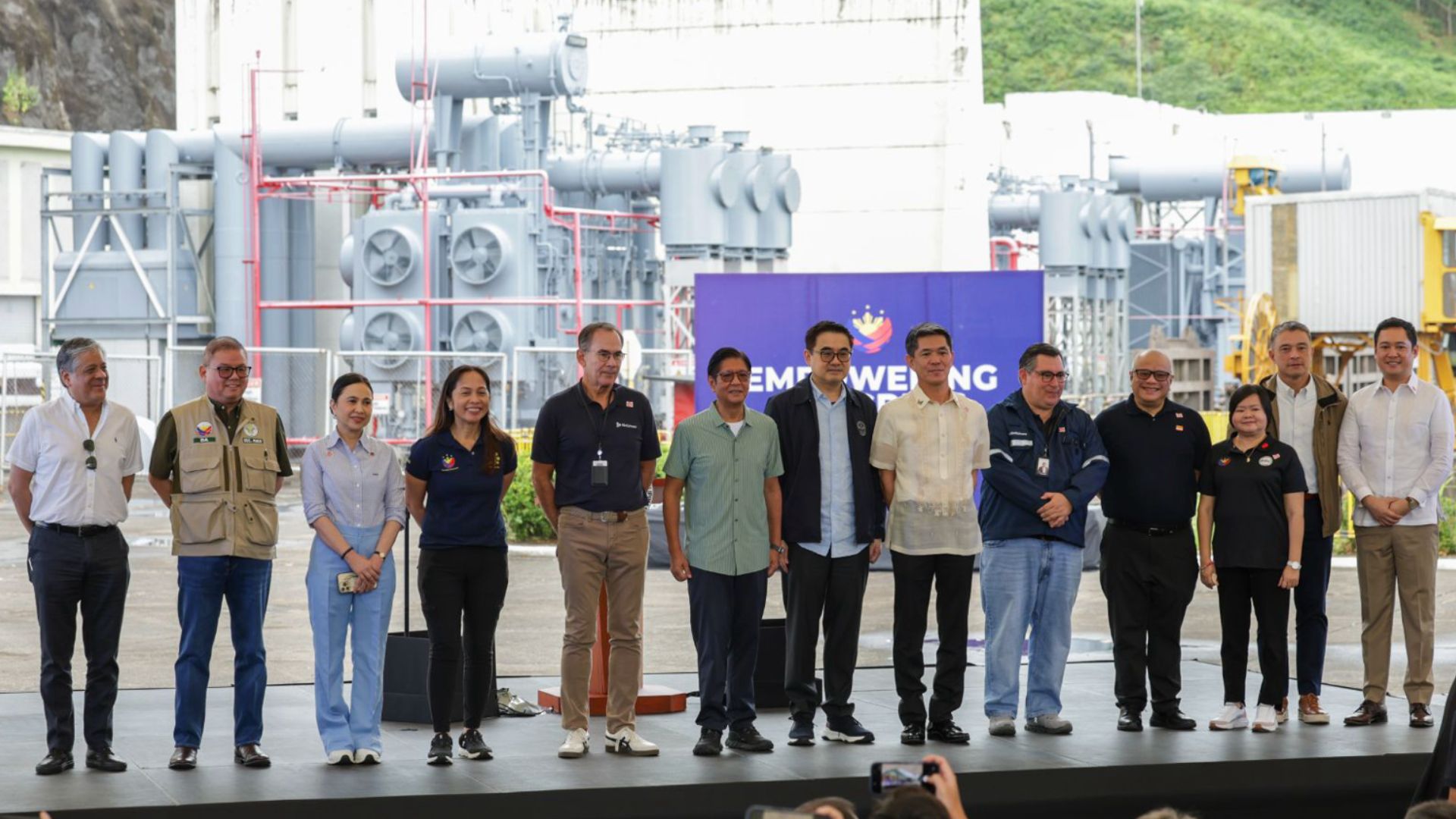







The Philippine government has formally turned over the 797-megawatt Caliraya-Botocan-Kalayaan Hydroelectric Power Plant Complex to the Thunder Consortium, led by Aboitiz Power Corporation through its renewable energy arm Aboitiz Renewables, Inc., marking one of the most consequential power sector privatizations in recent years.
The Thunder Consortium, which also includes Sumitomo Corporation and Electric Power Development Co., Ltd., won the competitive bidding conducted by the Power Sector Assets and Liabilities Management Corporation in July 2025. The transaction secured regulatory clearance from the Philippine Competition Commission in November.
The ceremonial turnover, held in Laguna, was led by Ferdinand Marcos Jr. alongside senior government officials and consortium representatives, with Japan’s ambassador to the Philippines in attendance. The event highlighted both the strategic importance of the CBK complex to the Luzon grid and the deepening Philippines-Japan cooperation in renewable energy development.
At the core of the CBK complex is the Kalayaan pumped storage facility, a critical grid asset that allows electricity to be stored and rapidly dispatched during peak demand or system disturbances. Unlike conventional generation, pumped storage functions as a large-scale energy buffer, providing essential ancillary services such as frequency and voltage regulation while enabling higher penetration of intermittent renewables like solar and wind.
Government officials framed the turnover as a deliberate step toward a more resilient and future-ready power system. The facility’s fast response capability is expected to play an increasingly important role as the Philippines accelerates its energy transition and manages tightening reserve margins in Luzon.
For AboitizPower, the acquisition significantly strengthens its renewable energy portfolio. The CBK complex adds a substantial hydroelectric base alongside a rare pumped storage asset, reinforcing the company’s strategy of maintaining a balanced generation mix that combines clean energy with system reliability. Company executives have noted that assets like CBK become more valuable as variable renewables expand, allowing the grid to absorb more green power without compromising stability.
The transaction also represents a milestone for the government’s broader privatization program. Proceeds from the sale contribute to fiscal resources for nation-building while transferring long-term operational responsibility to a private consortium with the technical expertise and financial capacity to manage complex infrastructure.
Industry observers point out that the CBK turnover comes at a critical moment for the Philippine power sector. With electricity demand continuing to rise and renewable capacity growing, grid flexibility has emerged as one of the system’s key constraints. Pumped storage facilities like Kalayaan remain scarce in the country, making CBK strategically important not only for its installed capacity but also for its role in maintaining grid integrity.
As stewardship shifts to the Thunder Consortium, attention now turns to how the new operators will sustain and potentially enhance the facility’s performance over the long term. For the Luzon grid, the CBK complex is expected to remain a cornerstone of reliability, quietly balancing the system as the country pushes toward a cleaner and more resilient energy future.