

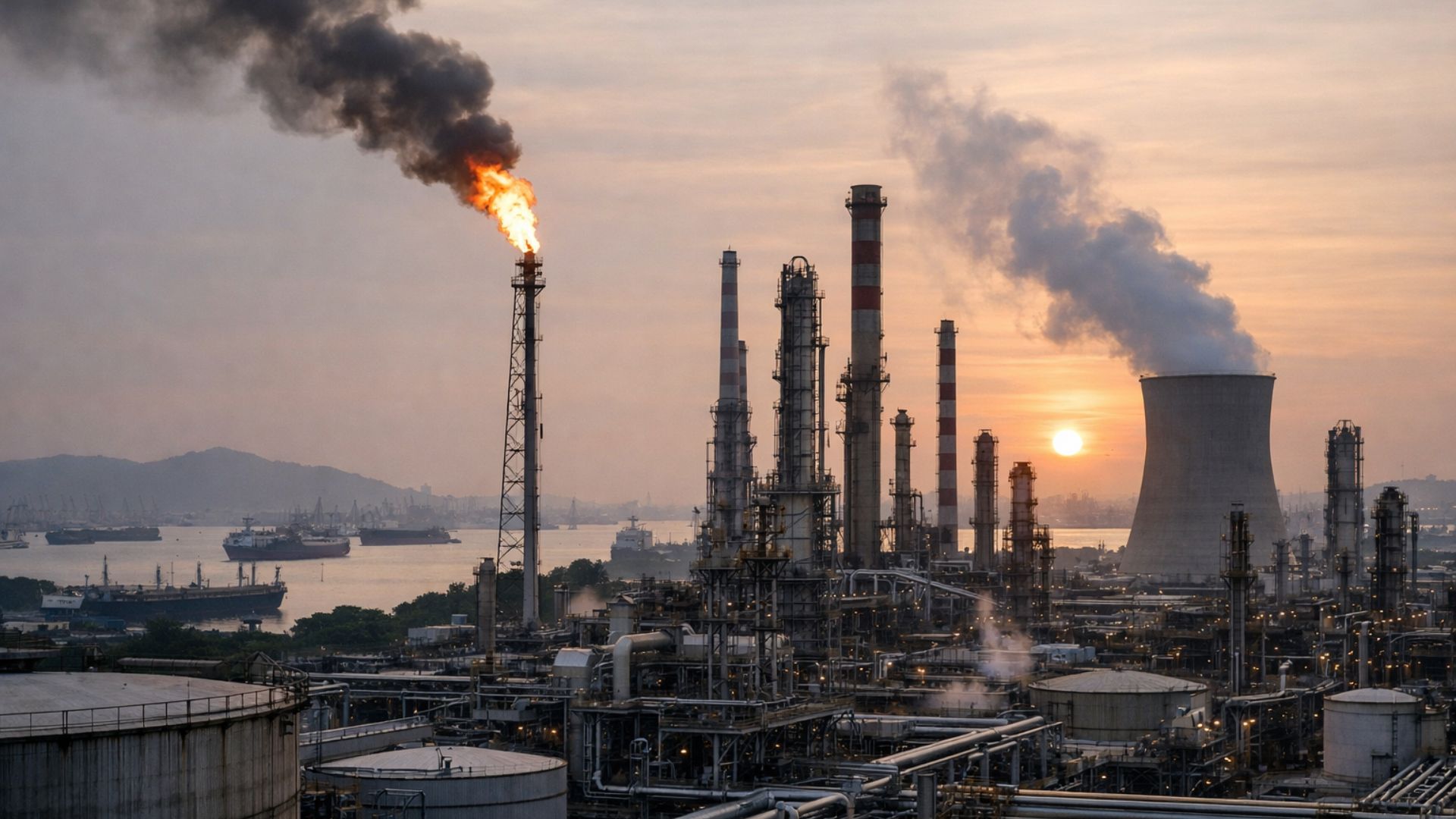







The 32 member countries of the International Energy Agency unanimously agreed on March 11, 2026 to release 400 million barrels of oil from emergency reserves, the largest collective action in the agency’s history, as ASEAN economic ministers gathered in Taguig City, Philippines two days later to formally warn that the Strait of Hormuz disruption was generating inflationary pressures across energy, food, and essential goods throughout Southeast Asia. Refineries in Singapore and Malaysia had already cut output due to feedstock shortfalls, and regional export bans were compressing supply corridors for smaller economies with no refining capacity.
Key Facts At A Glance
- IEA member countries unanimously agreed on March 11 to release 400 million barrels from emergency reserves, more than double the 182.7 million barrels released after Russia’s invasion of Ukraine in 2022
- The 32nd ASEAN Economic Ministers’ Retreat convened on March 13 in Taguig City, Philippines, chaired by Philippine Department of Trade and Industry Secretary Ma. Christina A. Roque
- ASEAN economic ministers stated that disruptions were generating higher freight, insurance, and logistics costs with inflationary pressure on energy, food, and essential goods across the bloc
- The IEA confirmed that Asian member countries would begin releasing stocks immediately, with Asia-Pacific and European members releasing over 100 million barrels in the first tranche
- Southeast Asian refineries in Singapore and Malaysia reduced output due to constrained crude availability; the Singapore complex margin surged to approximately USD 30 per barrel, near a four-year high
- ASEAN economic ministers specifically flagged the need to accelerate the ASEAN Petroleum Security Agreement as a regional emergency tool
- Brent crude reached a peak of approximately USD 119–126 per barrel in early March before partial easing; IEA data showed Strait of Hormuz export volumes had fallen to less than 10 percent of pre-conflict levels
The Regional Stakes Of A Global Chokepoint
The Strait of Hormuz disruption, which began when Operation Epic Fury’s airstrikes on February 28 killed Iranian Supreme Leader Ayatollah Ali Khamenei and prompted Iran to restrict commercial maritime transit, created conditions with no close historical parallel for Southeast Asian energy markets. Roughly 60 percent of Asia’s crude oil imports and approximately one-third of its LNG normally transits the strait. The IEA’s March 2026 Oil Market Report confirmed that export volumes through the strait had fallen to less than 10 percent of pre-conflict levels by the time of the emergency reserve decision, with Gulf producers cutting total oil production by at least 10 million barrels per day.
For Southeast Asia specifically, the structural exposure runs deeper than headline crude import dependence. The Philippines, Thailand, Malaysia, and Brunei are among the economies most exposed, relying on imports for 60 to 95 percent of their crude supply, according to the Economic Research Institute for ASEAN and East Asia. Vietnam’s Nghi Son refinery, which processes Kuwaiti crude, faced feedstock risks within days. Indonesia, despite being the region’s largest oil producer by volume, imports more than one-third of its crude and had budgeted 2026 energy subsidies at USD 70 per barrel, against an actual price that peaked above USD 100 a barrel.
ASEAN Economic Ministers: The Formal Record
The 32nd ASEAN Economic Ministers’ Retreat on March 13 produced the bloc’s first formal collective statement on the energy dimensions of the Hormuz crisis. The ministers stated that the conflict had generated heightened volatility in global energy markets and disruption to maritime and supply chain routes. They warned that disruptions were producing higher freight, insurance, and logistics costs contributing to inflationary pressures on energy, food, and essential goods across Southeast Asia. A prolonged conflict, the statement said, could pose sustained challenges to the global economic outlook and impact economic security, the livelihoods of millions, and economic progress across the bloc.
The statement carried specific policy directives: member states should manage energy consumption, diversify energy sources and supply routes with a focus on biofuels and renewable energy, and deepen regional cooperation on energy preparedness and reserves. Philippine Trade Undersecretary Allan Gepty indicated at a press briefing that the crisis may accelerate completion of the ASEAN Petroleum Security Agreement, a regional framework that would allow members to supply petroleum to neighbors facing shortages. Indonesia’s President Prabowo Subianto separately called on coal and palm oil producers to prioritize domestic needs.
The IEA Release And Its Reach Into Asia
The IEA’s March 11 announcement represented the sixth collective emergency action in the agency’s history, following interventions in 1991, 2005, 2011, and twice in 2022. The scale was unprecedented: 400 million barrels against the 182.7 million released after Russia’s invasion of Ukraine. IEA Executive Director Fatih Birol framed it directly, describing the oil market challenges as unprecedented in scale.
A follow-up IEA statement confirmed that Asian member countries would release stocks immediately. IEA member countries in Asia-Pacific and Europe committed to more than 100 million barrels in the first tranche, with Americas-based members releasing more than 170 million barrels. Birol specifically thanked Singapore, Thailand, and Vietnam among the nations supporting the release. However, analysts cautioned that pace of release, refinery access, and shipping logistics would determine actual market impact. The 400 million barrels represented approximately 20 days of pre-conflict Hormuz transit volume, in French President Emmanuel Macron’s framing. Given that Hormuz flows had fallen to under 10 percent of pre-conflict levels, the reserve release functioned as a bridge measure rather than a structural solution.
Refinery Compression And The Downstream Grid Connection
The refinery dimension of the crisis carries a direct energy sector consequence that extends beyond fuel pump prices. Refineries in Singapore and Malaysia reduced output due to feedstock shortfalls. Singapore’s complex refining margin surged to approximately USD 30 per barrel, its highest level in nearly four years, a signal of acute imbalance between available crude and refined product demand. Most Asian refineries are configured to process medium-sour crude grades sourced from the Middle East, limiting the operational flexibility to substitute with alternate grades without risking equipment stress or output degradation.
Reduced refinery throughput compresses availability of diesel, jet fuel, and petrochemical feedstocks simultaneously. Diesel shortfalls affect electricity generation at oil-fired power stations, backup power for industrial facilities, and logistics systems that support grid maintenance and supply chain operations. Jet fuel curtailments add to the pressure on freight routing. The cascade from crude shortage through refinery compression to grid-adjacent fuel availability represents the channel through which the Hormuz disruption reaches electricity sector operations in economies without emergency buffer arrangements comparable to northeast Asian peers.