

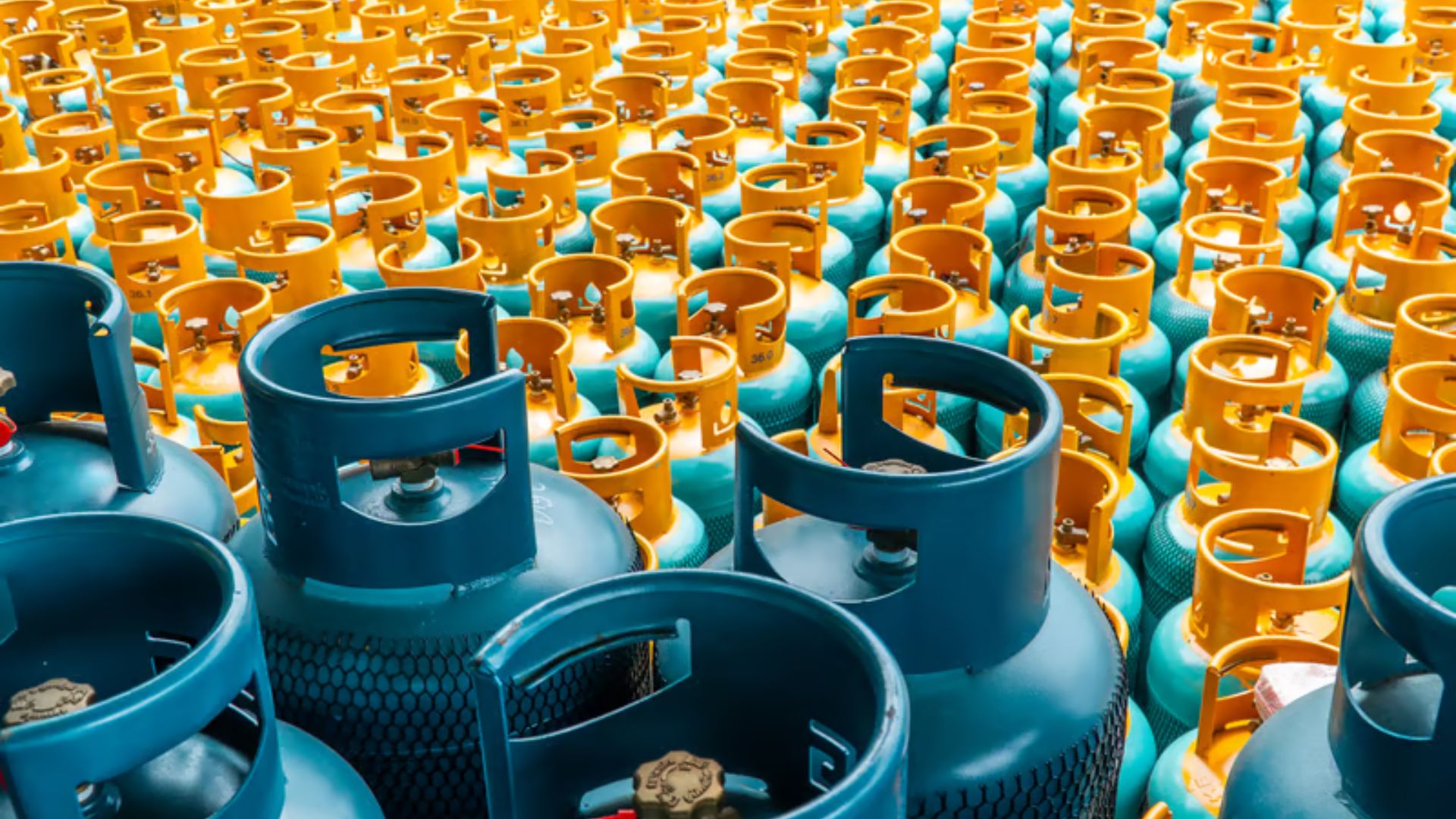







President Ferdinand Marcos Jr. exercised emergency fiscal powers for the first time under Republic Act 12316 on April 13, 2026, ordering the immediate suspension of excise taxes on liquefied petroleum gas and kerosene as the Middle East conflict continues to push Philippine fuel prices to historic highs. The decision delivers targeted household relief but leaves levies on diesel and gasoline under separate review, exposing the limits and political tensions surrounding the government’s crisis response framework.
Key Facts At A Glance
- Excise tax suspension announced April 13, 2026 at a Malacañang press briefing
- LPG excise suspended at P3.36 per kilo, equivalent to approximately P37 per standard 11-kilogram tank
- Kerosene excise suspended at P5.65 per liter
- Current LPG retail prices range from P1,000 to P1,600 per tank; kerosene ranges from P154 to P177 per liter
- Authority invoked under Republic Act 12316, signed into law March 25, 2026
- RA 12316 triggers when average Dubai crude oil price reaches or exceeds $80 per barrel for one continuous month; WTI futures were above $103 per barrel as of April 13
- Suspension valid for up to three months per invocation; total authority capped at one year and expires December 31, 2028
- Excise tax on diesel and gasoline not suspended; deferred to UPLIFT Committee meeting on April 14
- Value-added tax on fuel products retained; Marcos explicitly declined to reduce it
- Full suspension of excise on all fuels estimated to carry a foregone revenue cost of approximately P121.4 billion
The Mechanics Of RA 12316
Republic Act 12316 was passed by Congress and signed into law by President Marcos on March 25, 2026, exactly one day after he declared a state of national energy emergency through Executive Order No. 110. The law grants the President authority to suspend or reduce excise taxes on petroleum products upon the recommendation of the Development Budget Coordination Committee (dbcc.gov.ph) and in coordination with the Secretary of Energy. The trigger mechanism is price-indexed: the suspension power activates when the average price of Dubai crude oil based on the Mean of Platts Singapore exceeds $80 per barrel for one continuous month preceding the issuance of the order.
The law took effect fifteen days after its publication, placing the earliest legal date for a presidential executive order at April 12 or 13. The Department of Finance’s Undersecretary Fermin Adriano confirmed to a Senate hearing that the DBCC was aligned on recommending action around that date. RA 12316 allows the suspension or reduction to be applied to specific petroleum products — not necessarily all fuels at once — and each suspension period may not exceed three months. The total duration across all invocations is capped at one year within the law’s operational window.
Targeted Approach: Why LPG And Kerosene
The choice to begin with LPG and kerosene, while deferring diesel and gasoline, was deliberate and documented in Senate testimony. Finance Undersecretary Adriano said the DBCC’s approach was designed to be targeted: data from the department shows that approximately 85% of diesel consumers and 50% of gasoline consumers belong to higher-income segments. Suspending excise taxes on those fuels, Adriano said, would primarily benefit wealthier households and business operators rather than the intended low- and middle-income beneficiaries.
LPG and kerosene, by contrast, are the primary cooking fuels for households in the bottom half of the income distribution. LPG is the dominant household cooking fuel in urban and peri-urban areas, while kerosene remains widely used in rural communities and areas with limited electricity access. The targeted framing also reflects a fiscal constraint: a full suspension of excise taxes across all petroleum products carries an estimated foregone revenue impact of P121.4 billion, a figure Adriano disclosed in a Senate committee hearing prior to the president’s April 13 announcement.
Uplift Committee And Pending Diesel Question
The same afternoon that Marcos suspended the LPG and kerosene excise, he confirmed that the question of diesel and gasoline excise taxes would be taken up at the UPLIFT Committee meeting on April 14. The Unified Package for Livelihoods, Industry, Food, and Transport committee serves as the coordinating body for the government’s crisis response under Executive Order No. 110. Senator Sherwin Gatchalian, speaking at a Senate hearing on April 13 shortly after the announcement, noted that the public had anticipated relief on diesel and gasoline first, and questioned finance officials on the sequencing. Gatchalian described excise suspension as the fastest available mechanism for consumer price relief, even as he acknowledged it had previously been treated as a last resort.
The VAT Question
Several legislators and transport groups called for the simultaneous suspension or reduction of the 12% value-added tax on petroleum products. Marcos explicitly declined. He stated that at current elevated global oil prices, the government is generating windfall VAT revenues and that those proceeds are needed to fund wider public support programs. Adriano further noted that VAT suspension carries structural complications: if output is VAT-exempt but inputs were purchased with VAT already paid, input tax credits cannot be claimed, creating complexity that does not arise with excise adjustments (newsinfo.inquirer.net). Senate President Pro Tempore Panfilo Lacson had earlier estimated that suspending the excise tax on all petroleum products could cost the government approximately P200 billion, with a separate VAT suspension adding roughly P120 billion in lost revenues.
Supply Inventory Context
The excise suspension was announced on the same day that oil companies confirmed the first major pump price rollback since the Middle East conflict began in late February 2026. The DOE’s Energy Secretary Sharon Garin disclosed on April 13 that the country’s average petroleum inventory stood at 50.31 days of supply — with gasoline at 54.38 days, diesel at 48.90 days, LPG at 36.27 days, kerosene at 104.73 days, jet fuel at 67.65 days, and fuel oil at 45.96 days. Garin has publicly called for an expansion of strategic reserves beyond the current 60-day target, noting the Philippines operates a single refinery and has no sovereign petroleum reserve infrastructure comparable to larger regional economies.
The state-owned Philippine National Oil Company Exploration Corporation separately secured a delivery of 329,000 barrels of diesel from Malaysia over the weekend of April 12-13, part of a plan to bring in approximately 900,000 barrels during April. Additional shipments were expected in mid- to late April.
The Broader Policy Architecture
The excise suspension fits within a layered crisis response that the Marcos administration has assembled since the Strait of Hormuz disruption began. Executive Order No. 110, signed March 24, declared a state of national energy emergency and granted the president authority to implement a fuel and energy allocation plan and energy conservation measures. The Malampaya gas fund was drawn on in late March, with P20 billion released to the DOE for emergency fuel procurement. Petron Corporation ordered 700,000 barrels of crude from Russia following a 30-day US waiver on sanctioned Russian petroleum purchases. Fuel station monitoring has been deputized to local government units, the Philippine National Police, the National Electrification Administration, and the National Power Corporation. The excise suspension is the first direct price-side fiscal tool deployed under this architecture.