

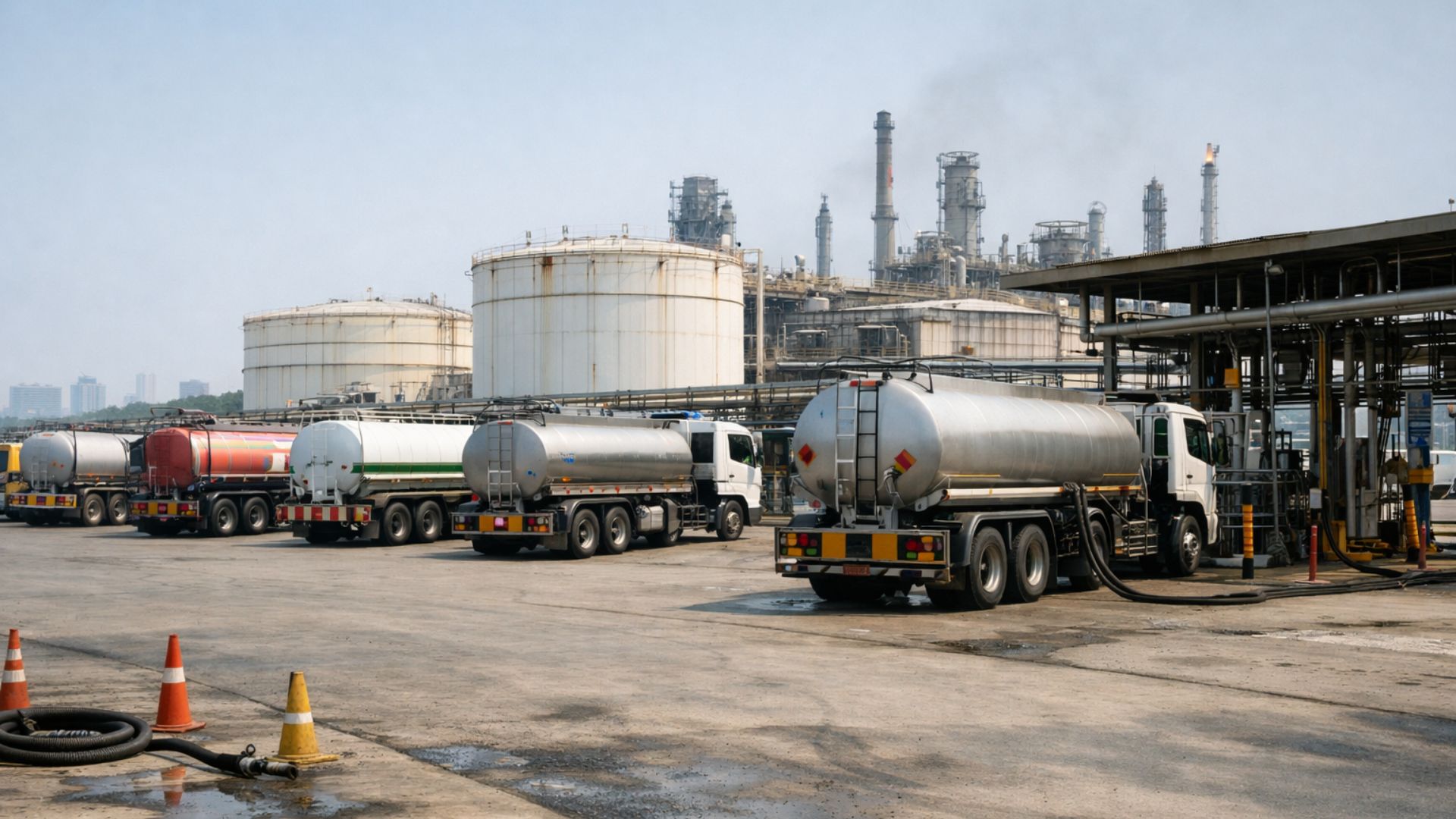







Thailand’s government publicly clarified on March 29, 2026 why it continues to ship approximately five million liters of refined fuel per day to Laos and Myanmar despite a nationwide oil export ban introduced from March 1, with officials confirming the carve-outs are tied directly to Thailand’s own electricity supply chain rather than standard bilateral trade obligations. The clarification, issued through the government’s Middle East Conflict Monitoring Centre, revealed that both export streams are embedded in power sector interdependencies that constrain Thailand’s ability to enforce a full export halt without incurring domestic generation costs.
Key Facts At A Glance
- Thailand’s oil export ban, issued under Prime Ministerial Order No. 2/2026, was published in the Royal Thai Government Gazette on March 6, 2026, and took effect immediately
- Fuels covered by the ban: gasoline, gasohol, high-speed diesel, Jet A1 aviation fuel, and LPG
- Laos exemption: approximately 4.6 million liters per day on average between March 1 and 25, down 25 percent from pre-ban levels
- Myanmar exemption: approximately 220,000 to 300,000 liters per day, down approximately 20 percent from previous levels
- Combined capped volume: approximately five million liters per day to both countries
- Laos rationale: bilateral hydropower import relationship; EGAT plans to raise Laos hydro imports from 13.7 percent to 18 percent of total supply for the May–August tariff period
- Myanmar rationale: Yadana gas field pipeline supplies natural gas via western Thailand to the Ratchaburi power plant complex, serving Thailand’s central and southern regions
- Spot LNG prices rose from approximately $10/MMBtu before the Hormuz closure to approximately $25/MMBtu at time of reporting
- Thailand’s refining capacity stands at approximately 77 million liters per day, against average consumption of 67 million liters, with panic buying pushing demand to 82–84 million liters
- The NESDC confirmed a potential shift to importing finished petroleum products from abroad for re-export to Laos, which could free up approximately five million liters per day of domestically refined fuel
The Export Ban And Its Structure
The formal order banning fuel exports was signed by Prime Minister Anutin Charnvirakul on March 6, 2026 and published in the Royal Thai Government Gazette under Prime Ministerial Order No. 2/2026. The measure was introduced as the Middle East conflict, which began on February 28, disrupted shipping through the Strait of Hormuz and triggered a domestic fuel shortage in Thailand compounded by public panic buying. The ban covers gasoline, gasohol, high-speed diesel, Jet A1 aviation fuel, and LPG and has no fixed end date. The order simultaneously raised mandatory domestic fuel reserve requirements, setting a target of 1.5 percent from March 31 and 3 percent from April 30.
The ban carried two explicit exceptions from the outset: exports to Laos and to Myanmar. A third category of exempted goods covers fuel imported for re-export and stored in bonded warehouses or free zones under customs law, along with off-specification products that cannot be sold domestically. The two country-specific exemptions were the subject of public scrutiny from early March onward, as Thai motorists faced fuel shortages at filling stations while state shipments continued across both borders.
The Laos Dimension: Hydropower As Collateral
The justification for the Laos carve-out lies in the structure of the Thailand–Laos electricity relationship. Laos has been exporting hydropower to Thailand under long-term power purchase agreements with the Electricity Generating Authority of Thailand since the early 2000s. By 2024, electricity imports from Laos served approximately 14 to 15 percent of Thailand’s electricity demand according to EGAT data, with the Electricity Generating Authority of Thailand holding agreements covering more than 10,000 MW of committed purchase capacity from Laotian projects. The NESDC secretary-general Danucha Pichayanan confirmed on March 29 that oil shipments to Laos are part of the bilateral energy cooperation framework underpinning those hydropower agreements, and that Thailand intends to increase hydropower imports from Laos to 18 percent of total supply during the May–August 2026 tariff period as a direct response to elevated LNG costs.
Natural gas accounts for approximately 58 percent of Thailand’s power generation mix according to the Energy Regulatory Commission, with electricity imports from Laos covering approximately 14 percent, coal 13 percent, renewables 12 percent, and hydropower and oil 3 percent. With spot LNG prices having risen from approximately $10 per MMBtu before the Hormuz closure to approximately $25 per MMBtu, Laotian hydropower becomes significantly more cost-competitive, and officials stated explicitly that the oil export carve-out is calibrated to preserve that supply relationship. Danucha described the logic as an energy management strategy rather than a standard export obligation, noting that the cost of electricity generation could rise sharply if the Laos connection were disrupted at a time when LNG alternatives are priced far above historical norms.
By March 21, the volume shipped to Laos had already been reduced by 25 percent relative to pre-crisis levels, to approximately 5.29 million liters per day, according to Prime Minister Anutin’s own statement following a state visit to Laos on March 16 to 18. Between March 1 and 25, actual export data from the NESDC confirmed an average of 4.6 million liters per day to Laos.
The Myanmar Dimension: Yadana Pipeline And The Ratchaburi Complex
The Myanmar carve-out is smaller in volume but carries a different structural rationale. Thailand imports natural gas from Myanmar via the Yadana pipeline, a transboundary pipeline linking Myanmar’s Yadana gas field in the Andaman Sea to the Ratchaburi province of Thailand. The pipeline, approximately 240 kilometers in length on the Thai side, runs from the Kanchanaburi border crossing to the Ratchaburi power plant complex, which has a combined installed capacity of more than 3,600 MW across multiple units operated by the Ratchaburi Electricity Generating Company Ltd. and associated entities. The plant receives gas sourced from the Yadana and Yetagun fields in Myanmar and operates under a 25-year power purchase agreement with the Electricity Generating Authority of Thailand.
Thailand’s government confirmed that oil shipments to Myanmar are maintained specifically to sustain this natural gas import relationship. Danucha stated on March 29 that Thailand continues to send oil to Myanmar because it imports natural gas from Myanmar via pipeline, and that the gas is used to generate electricity at the Ratchaburi power plant for Thailand’s central and southern regions. The Myanmar volume, approximately 220,000 to 300,000 liters per day, is substantially smaller than the Laos allocation and has itself been reduced by approximately 20 percent from pre-crisis levels.
The NESDC’s acknowledgment that both carve-outs serve Thailand’s domestic electricity generation interests rather than export market obligations reframes the policy not as a humanitarian exception but as a structural constraint embedded in Thailand’s power procurement architecture.
Domestic Supply Pressure And The Import Substitution Option
Thailand’s domestic fuel situation has been complicated by the gap between refining capacity and actual demand. The country’s refineries can produce approximately 77 million liters of refined fuel per day against average consumption of approximately 67 million liters per day, but public panic buying pushed daily demand to 82 to 84 million liters during the peak of the shortage, according to Anutin. Prime Minister Anutin apologized publicly for what he described as fuel mismanagement and called for consumer restraint, attributing the station-level shortfalls to a logistical distribution lag rather than an absolute supply deficit. The government allowed fuel transport operations to run 24 hours a day to accelerate restocking.
As of March 26, a Thai Chamber of Commerce survey of 550 petrol stations found 390 still out of fuel, down from 450 previously. Inspections by the Department of Special Investigation and provincial energy officials across seven provinces found no evidence of hoarding among major traders or depot operators. Crude oil imports between March 1 and 25 totaled approximately 4.231 billion liters, with further shipments of approximately 24 million barrels in April and eight million barrels planned for May.
In response to domestic pressure, Prime Minister Anutin instructed agencies to study whether Thailand could switch to importing finished petroleum products from abroad and re-exporting those to Laos, while retaining more domestically refined oil for local use. The NESDC secretary-general confirmed this approach could add approximately five million liters per day to domestic supply availability, effectively neutralizing the net cost of the Laos export carve-out on domestic inventories.