

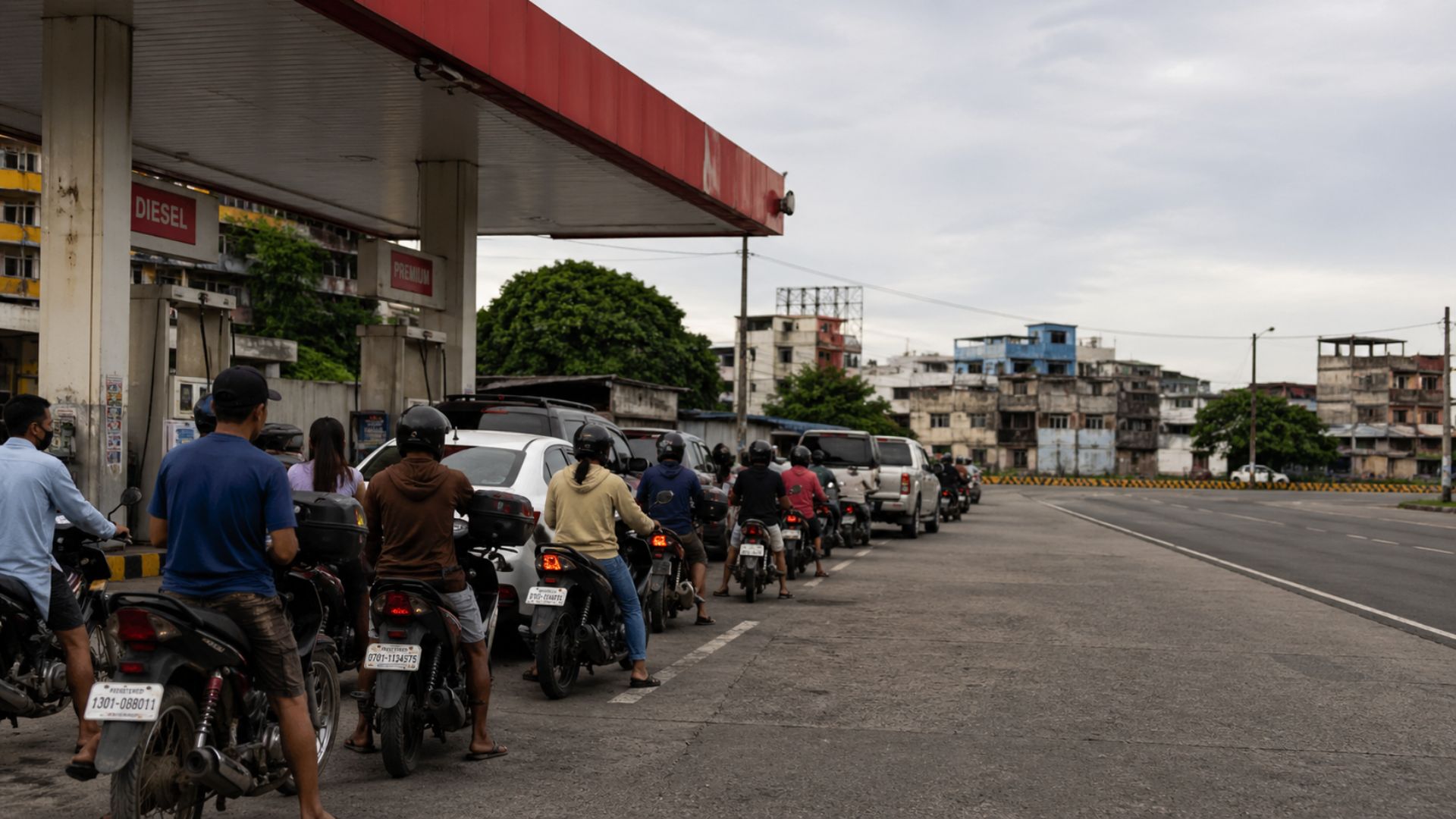







All eleven ASEAN energy ministers met virtually on April 27, 2026, for the first emergency convening of the ASEAN Ministers on Energy Meeting triggered by a single geopolitical event, adopting a joint statement that commits the bloc to coordinated action on oil and gas supply disruptions stemming from the closure of the Strait of Hormuz. The Philippines, as 2026 ASEAN chair, served a dual role in catalyzing the meeting.
Key Facts At A Glance
- The Special ASEAN Ministers on Energy Meeting was held virtually on April 27, 2026, chaired by Philippine Department of Energy Secretary Sharon S. Garin
- The meeting was preceded by an Ad-Hoc Senior Officials Meeting on Energy preparatory session on April 24, which included Dialogue Partners and briefings from the
- International Energy Agency and the ASEAN Centre for Energy
- The adopted joint statement urged expeditious ratification of the ASEAN Framework Agreement on Petroleum Security, known as APSA, and invoked its Coordinated Emergency Response Mechanism
- APSA was renewed at the 43rd ASEAN Ministers on Energy Meeting in Kuala Lumpur in October 2025 and expanded to include natural gas alongside petroleum
- Ministers reaffirmed APAEC 2026 to 2030 targets: 40% energy intensity reduction, 30% renewable share in total primary energy supply, and 45% in installed power capacity by 2030
- The joint statement explicitly cited the 1982 United Nations Convention on the Law of the Sea in calling for unimpeded transit passage through the Strait of Hormuz
- Singapore’s Ministry of Trade and Industry confirmed that Minister of State Gan Siow
- Huang represented Singapore at the meeting; Timor-Leste sent Minister of Petroleum and Mineral Resources Francisco da Costa Monteiro
The Crisis That Forced The Meeting
When the Strait of Hormuz was effectively closed following the outbreak of hostilities between Iran and the United States and Israel on February 28, 2026, roughly 20% of global oil and gas supply was removed from free flow. For ASEAN, a net energy-importing region, the impact was disproportionate: approximately 80% of the oil that transits the Strait is bound for Asia. The Philippines, which imports approximately 98% of its crude from the Middle East, declared a state of national energy emergency on March 24. Within weeks, fuel shortages were reported across Cambodia, Laos, Myanmar, and Thailand, while Indonesia faced acute fiscal pressure from its consumer fuel subsidy program, budgeted at crude oil assumptions of roughly $70 per barrel against actual prices near $100.
The crisis exposed a structural vulnerability in ASEAN’s energy governance: the bloc had a petroleum-sharing framework on paper but no operationalized emergency response mechanism in force. APSA, first signed in 1986 and modernized in 2009, was most recently renewed in October 2025 and expanded to cover natural gas in recognition of the region’s growing LNG dependency. However, as of the April 27 meeting, not all member states had completed national ratification processes, leaving the Coordinated Emergency Response Mechanism unable to be formally activated.
Preparing The Ground: The April 24 Senior Officials Session
Three days before the ministerial convened, the Ad-Hoc Senior Officials Meeting on Energy prepared the ground with a consultative session that brought together senior energy officials from all member states alongside Dialogue Partners. The session assessed supply risks, reviewed proposed emergency response activations under APSA’s Coordinated Emergency Response Mechanism, and progressed the draft joint statement. The IEA provided a global energy situation briefing; the ASEAN Centre for Energy presented regional supply and demand analysis.
What The Meeting Produced
The adopted joint statement carried five principal operative commitments. First, ministers called for the expeditious completion of national ratification processes for APSA, recognizing that the agreement cannot be operationalized at full legal force until all member states have deposited instruments of ratification. Second, they underscored the legal basis for Hormuz passage, citing UNCLOS and calling on all parties to maintain freedom of navigation for energy trade vessels. Third, they committed to advancing the APAEC 2026 to 2030 targets, framing energy transition not as a climate obligation but as a supply security strategy. Fourth, the statement called for acceleration of biodiesel and bioethanol blending, electric vehicle adoption, renewable energy deployment, and exploration of civilian nuclear energy in accordance with international safety standards. Fifth, ministers tasked relevant ASEAN bodies and the ASEAN Secretariat to report progress at the 44th ASEAN Ministers on Energy Meeting.
The statement also emphasized the Trans-ASEAN Gas Pipeline as a vehicle for expanding LNG infrastructure and supply chain resilience, and called for strengthening intra-ASEAN energy trade as a partial substitute for Gulf-origin supplies.
The APSA Ratification Problem
APSA’s significance to the April 27 meeting cannot be understood without context. ASCOPE records indicate the 2009 APSA successor agreement had been ratified by ten member states before Timor-Leste’s accession in October 2025. The renewed 2025 APSA, expanded to cover natural gas, requires fresh national ratification processes. Singapore’s Foreign Affairs Minister Dr. Vivian Balakrishnan had called explicitly at the April 13 Special ASEAN Foreign Ministers’ Meeting for expeditious APSA ratification, noting that Indonesia had only recently signed and urging all members to ratify promptly so officials could operationalize CERM procedures. The April 27 energy ministerial repeated this call, indicating ratification remains incomplete across the bloc and that the mechanism the region needs most urgently is not yet fully in force.
The ASEAN Power Grid: A Decades-Deferred Ambition Revived
One of the more consequential long-term threads running through the April 27 meeting was renewed political pressure on the ASEAN Power Grid, a regional interconnection initiative under discussion since the late 1990s. Singapore’s Balakrishnan, in his April 13 Foreign Ministers’ remarks, made an unusually direct statement: “We’ve been talking about an ASEAN Power Grid for two decades, as far as I can remember. I wish we had done it and achieved that earlier.” He called the current crisis a catalyst for action, urging the region to use the moment to drive investment in renewable infrastructure and position ASEAN as a net energy exporter over the long term. The APG Enhanced Memorandum of Understanding had been endorsed at the 43rd AMEM in October 2025, along with the ASEAN Power Grid Financing Initiative. The April 27 joint statement reinforced that momentum, framing the interconnection agenda as integral to long-term resilience.
Timor-Leste’s Debut In Asean Energy Diplomacy
A notable institutional dimension of the April 27 meeting was the formal participation of Timor-Leste, which became the eleventh ASEAN member on October 26, 2025. Minister Monteiro’s statement to the virtual session, acknowledging Timor-Leste’s full import dependency and sourcing of fuel from ASEAN member states, marked the country’s first active contribution to collective ASEAN energy governance under a crisis condition. The participation signals that Timor-Leste, despite having no operational domestic oil and gas production feeding its grid, is orienting itself toward regional cooperation frameworks as a strategic priority.