

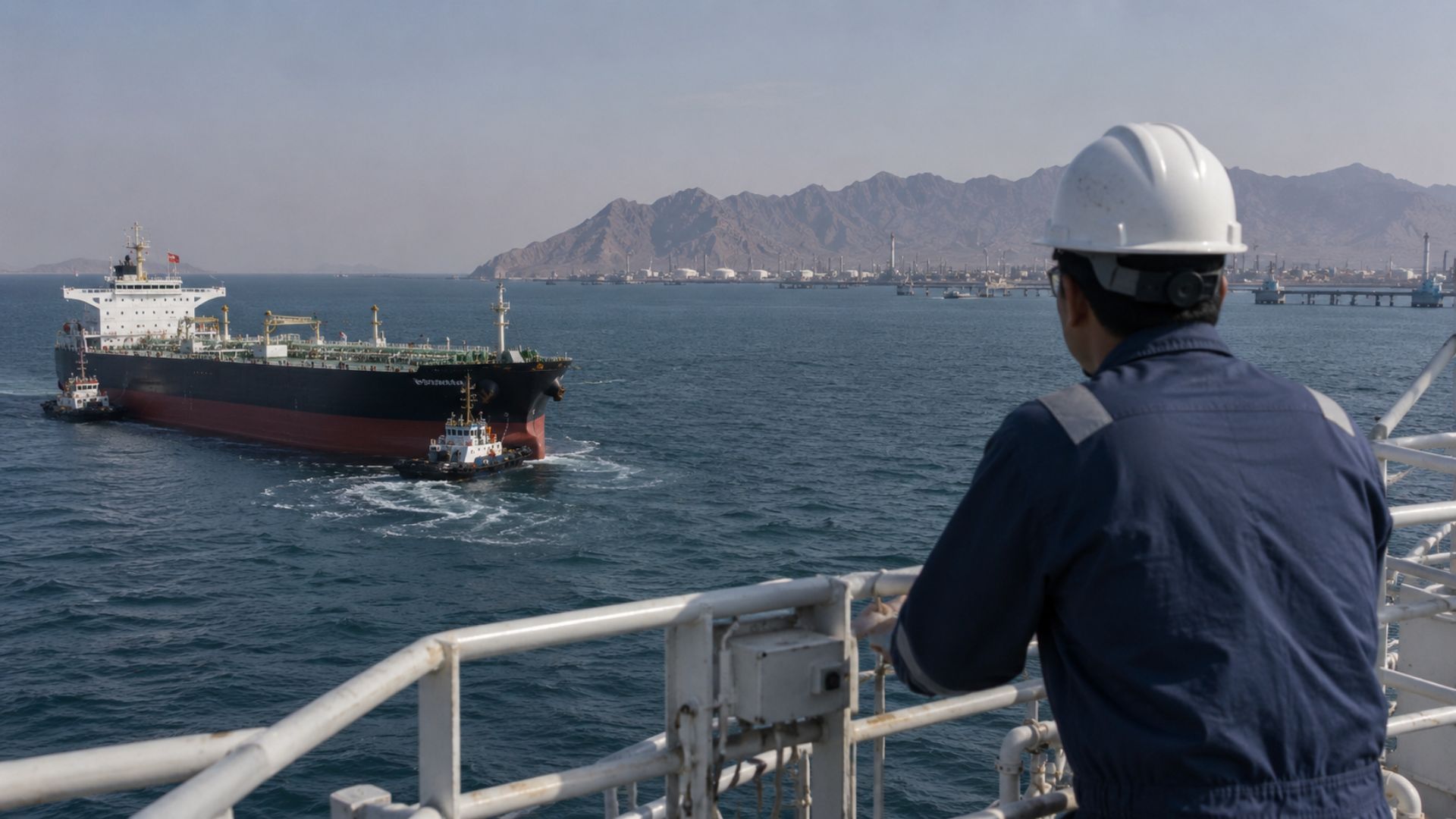







The U.S. Energy Information Administration’s May 2026 Short-Term Energy Outlook, released May 12, projects Brent crude prices averaging around USD 106 per barrel through May and June, as global oil inventory draws reach 8.5 million barrels per day in the second quarter — a pace not seen in recorded market history. The IEA’s concurrent May Oil Market Report warns that the global oil market is likely to remain materially undersupplied through October 2026, even if the Strait of Hormuz partially reopens in June, making these projections the most consequential supply-side benchmarks Southeast Asian energy planners and regulators will use in setting second-half tariff structures.
Key Facts At A Glance
- Brent crude averaged USD 117 per barrel in April 2026, peaking at USD 138 per barrel on April 7; futures closed near USD 105–106 per barrel on May 13–14, 2026
- EIA’s May 2026 STEO assumes the Strait of Hormuz remains effectively closed through late May, with shipping traffic beginning to partially resume in June
- Gulf producers collectively shut in approximately 10.5 million barrels per day of crude oil production in April 2026, per EIA assessment; total cumulative supply losses since February now exceed 1 billion barrels
- Global oil supply declined a further 1.8 million barrels per day in April to 95.1 million barrels per day, per IEA May Oil Market Report; total losses since February reached 12.8 million barrels per day
- The IEA projects global refinery crude throughputs to fall by 4.5 million barrels per day in the second quarter of 2026 to 78.7 million barrels per day
- UAE formally exited OPEC on May 1, 2026; EIA’s May STEO incorporates that change, reducing OPEC spare capacity projections for 2027
- EIA projects Brent to fall to an average of USD 89 per barrel in the fourth quarter of 2026 and USD 79 per barrel in 2027, contingent on Hormuz resumption
Brent Crude Holds Above USD 105 Amid Stalled Diplomacy
Brent crude futures settled near USD 105.72 per barrel on May 14, closing above USD 106 per barrel through the week on a gain of more than 5 percent, as diplomatic efforts to end the US-Iran conflict produced no resolution. The current ceasefire, announced April 8, has not translated into restored tanker traffic. US President Donald Trump described the ceasefire as on “massive life support” after dismissing Iran’s latest peace proposal. Iran has reportedly allowed limited transit for some Chinese vessels through the Strait while blocking broader commercial shipping, and US Secretary of State Marco Rubio urged Beijing to leverage that influence to push for full reopening.
The Trump-Xi bilateral meeting on May 14 yielded a joint statement that “the Strait of Hormuz must remain open to support the free flow of energy,” with President Xi expressing interest in purchasing US crude oil. Chinese state media did not reference Hormuz or oil purchases in its readout of the meeting. The divergence in official accounts left markets with no definitive signal on transit restoration.
The Scale Of The Supply Shock
The May 2026 IEA Oil Market Report characterized the cumulative losses as unprecedented. More than 14 million barrels per day of supply from Gulf producers is currently shut in, with total cumulative supply losses since February exceeding 1 billion barrels. The EIA’s May STEO reported that Strait of Hormuz crude and fuel flows fell by nearly 6 million barrels per day in the first quarter of 2026 alone. Saudi Arabia separately informed OPEC that its oil production had dropped to its lowest level since 1990.
Even alternative export routes are operating at constrained capacity. Saudi Arabia’s East-West Pipeline, which bypasses the Strait via the Red Sea port of Yanbu, along with the UAE’s Fujairah terminal, have increased combined throughput but can offset only a fraction of the pre-war Hormuz volume. IEA analysis indicates existing bypass infrastructure can offset approximately 35 percent of prior Strait throughput at most.
Prices have swung sharply. North Sea Dated fell from a record USD 144 per barrel in mid-April to below USD 100 per barrel before rebounding. The spread between physical crude and futures contracts — which reached a record USD 35 per barrel in mid-April before narrowing to approximately USD 3 per barrel in early May — reflects the market’s ongoing difficulty in pricing the gap between contracted supply and physical availability.
Global Inventory Draws And Asian Exposure
The IEA reported that observed global oil inventories, including oil on water, fell by 250 million barrels over March and April combined, or approximately 4 million barrels per day. Crude oil stocks in oil-importing countries in Asia dropped by 31 million barrels in March, with further declines projected in April. Asian petrochemical producers have curtailed operating rates as feedstock supply dried up, with petrochemical feedstock volumes the most disrupted component of the product complex.
Global oil demand contracted by an estimated 800 thousand barrels per day year-on-year in March and 2.3 million barrels per day in April. For the year as a whole, the IEA now projects global oil demand will decline by 420 thousand barrels per day, a revision of 1.3 million barrels per day weaker than the agency’s pre-conflict forecast.
For Southeast Asia, the implications are structural. Around 84 percent of the crude oil and 83 percent of the LNG transiting the Strait in 2024 was destined for Asia. The IEA noted that Asian buyers absorb approximately 89 to 90 percent of total Strait oil flows in aggregate. Southeast Asian economies, lacking strategic petroleum reserves equivalent in scale to OECD members, have faced acute near-term inventory pressure. Several states in the region, including the Philippines, Vietnam, and Thailand, have implemented demand-management measures, fuel substitution, or subsidy instruments directly calibrated to per-barrel pricing assumptions that the EIA and IEA forecasts will now anchor.
UAE OPEC Exit Complicates The Supply Outlook
The UAE formally exited OPEC on May 1, 2026, effective immediately. The EIA’s May 2026 STEO incorporates the departure, revising OPEC spare capacity projections for 2027 downward from 3.8 million barrels per day to 2.5 million barrels per day. The UAE was OPEC’s third-largest producer before the crisis, with production capacity reaching 4.85 million barrels per day by 2024.
The immediate market impact of the exit is constrained by the Hormuz closure, which has shut in approximately 2 million barrels per day of UAE offshore production regardless of OPEC membership status. Wood Mackenzie analysis noted the exit is therefore more likely to influence supply dynamics in 2027 and beyond, particularly given the UAE’s commitment of USD 145 billion in upstream investment through 2030 to reach 5 million barrels per day of capacity. Once the Strait reopens, an unconstrained UAE operating outside OPEC quotas could direct more light, low-sulfur Murban crude toward Asian markets, including Southeast Asian refiners.
OPEC reduced its 2026 demand growth estimate to approximately 1.2 million barrels per day from 1.4 million barrels per day in its latest monthly update, reflecting the demand destruction associated with the ongoing crisis.
Forecast Dependency On Hormuz Assumptions
The EIA acknowledged explicitly in its May 2026 STEO that the Brent price forecast is highly dependent on two variables: the duration of Hormuz closure and the pace at which shut-in Middle East production returns. The current base case assumes partial Hormuz resumption in June and a gradual return toward pre-conflict production levels through late 2026 or early 2027, with some Middle East producers not expected to recover to pre-conflict output levels within the STEO’s forecast window. Under the agency’s base case, Brent is projected to average USD 89 per barrel in the fourth quarter of 2026 and USD 79 per barrel in 2027.
If the conflict extends or Hormuz remains closed past the assumed late-May inflection point, the IEA’s alternative scenario — labeled “Strait Down” — projects that the global oil market and economies worldwide will face significantly deeper disruption in the months ahead.