

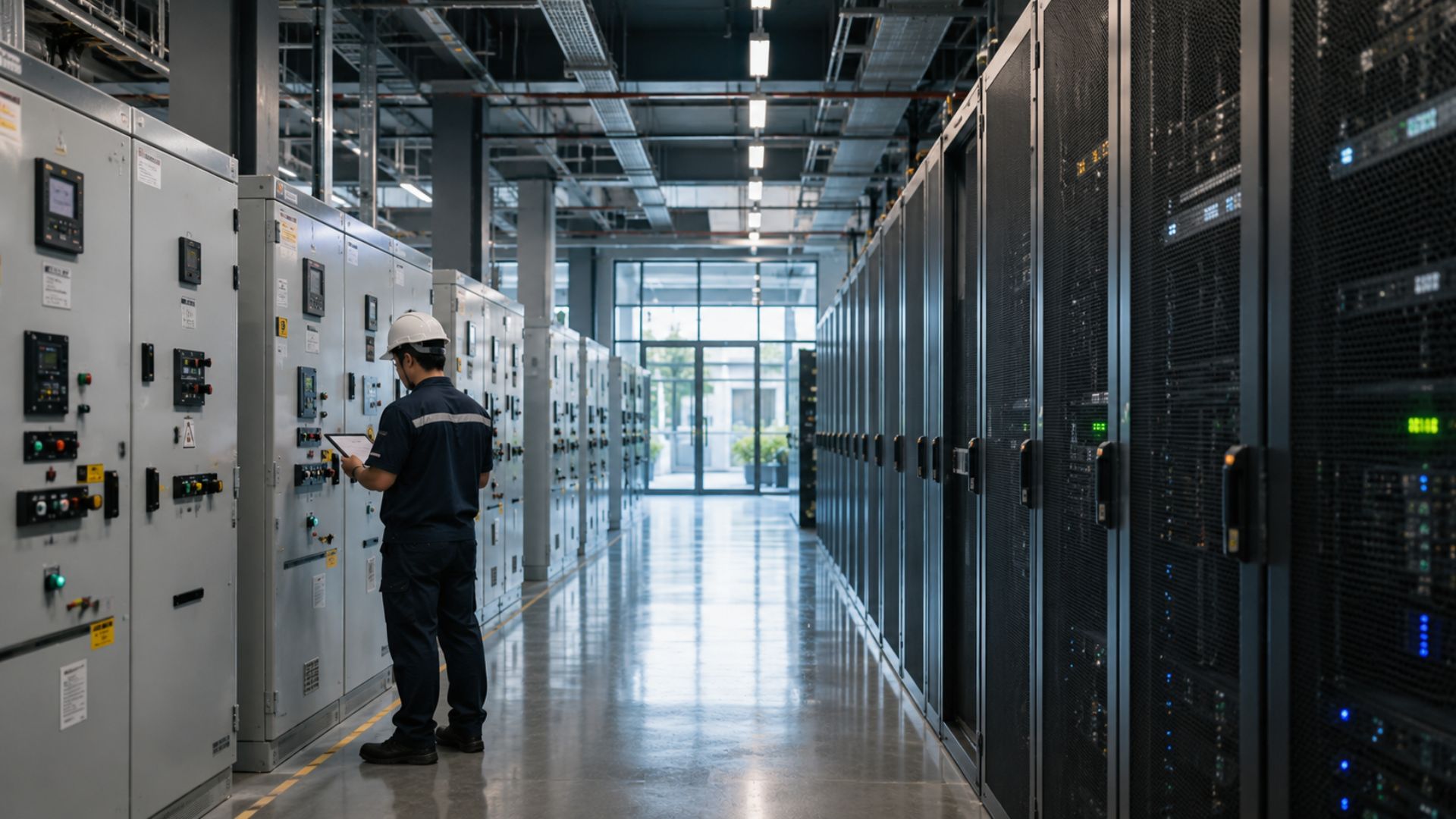







EI Power Berhad, a Shah Alam-based power engineering solutions firm supplying mission-critical electrical systems to data centers, is scheduled to list on the ACE Market of Bursa Malaysia Securities Berhad on May 21, 2026, after its initial public offering was oversubscribed 30.8 times — a result that positions the company as one of the most closely watched digital infrastructure plays to debut on the exchange this year.
Key Facts At A Glance
- EI Power Berhad’s IPO, priced at 48 sen per share, raised gross proceeds of RM 62.2 million from the public issue of 129.5 million new shares, representing 18.5% of its enlarged share capital.
- The IPO was oversubscribed 30.8 times overall; the public portion was oversubscribed 45.8 times, attracting 12,326 applications for 818.12 million shares against 35 million available.
- The company posted a net profit of RM 6.03 million on revenue of RM 20.75 million for Q1 2026, with its mission-critical power segment contributing approximately 98% of total quarterly revenue.
- EI Power’s unbilled order book stood at RM 99.9 million as of March 24, 2026, providing earnings visibility through to 2027.
- Upon listing, the company is expected to have a market capitalization of RM 336 million, based on an enlarged share base of 700 million shares.
- EI Power is 52% owned by OCK Group Berhad, a telecommunications tower operator, and co-founded by CEO Albert Chang Wan Siong, who also holds a direct equity stake.
- Since 2022, EI Power has delivered 146 projects across data centers, industrial properties, and commercial buildings in Malaysia.
- IPO proceeds are allocated to a new headquarters and warehouse in Selangor, a branch office in Johor, an office in Thailand, building energy efficiency systems, and working capital.
A Company Built On Digital Infrastructure Demand
EI Power Berhad was founded in 2010 by Albert Chang Wan Siong, a professional engineer who began the business installing generator sets for shopping malls, factories, and commercial buildings in Malaysia. The company’s strategic inflection came in 2021, when it secured its first data center-related contract — a diesel generation and distribution system for a facility in Bukit Jalil, Kuala Lumpur. That single contract opened a pipeline that has since grown to define the company’s entire business character: mission-critical power systems for data centers requiring Tier 3 and Tier 4 redundancy standards, the highest in the industry.
Between December 2023 and August 2025, EI Power secured RM 103.17 million in mission-critical power solutions contracts from data centers in Cyberjaya, Johor Bahru, Kulai in Johor, and Nilai in Negeri Sembilan. By the time the company filed for its ACE Market listing, approximately 98% of its quarterly revenue was derived from the mission-critical power segment — a concentration that reflects both the strength of demand and the company’s deliberate exit from lower-margin conventional engineering work.
OCK Group Berhad, which controls 52% of EI Power, has positioned the subsidiary as part of a broader digital infrastructure pivot. OCK Group managing director Datuk Sam Ooi Chin Khoon said the group’s ambition now extends beyond its traditional telecommunications tower footprint. EI Power’s data center power systems business serves as OCK’s entry into the building-level infrastructure layer of the digital economy — a segment that requires technical specialization, Tier IV certification, and the ability to execute complex, large-scale electrical engineering projects under tight reliability constraints.
The Data Center Demand Context
EI Power’s listing arrives at a moment when Malaysia’s data center market is undergoing a structural transformation that is reshaping the country’s power sector. JLL Malaysia’s second-quarter 2026 report projects total data center capacity in Malaysia will reach 2,055 MW by end-2026 — more than double prior levels — with Johor Bahru recording a compound annual growth rate of 70% since 2020, described by JLL as the fastest in the Asia-Pacific region.
Tenaga Nasional Berhad has disclosed a pipeline of more than 7 GW in committed data center demand through signed Electricity Supply Agreements as of September 2025. Kenanga Research data shows that data center load had already surged approximately six-fold since early 2024, with actual load utilization reaching 850 MW against a contracted maximum demand pipeline of 5.9 GW — a gap that signals the volume of projects still being commissioned. Maybank’s research division noted that year-to-date 2026 data center-related contract awards have reached RM 7.4 billion, putting the market on pace to surpass 2025 levels on an annualized basis.
This capacity build-out is concentrated in two geographies: Johor — accounting for more than 60% of total data center capacity — and Selangor’s Klang Valley. Johor’s growth has been directly catalyzed by Singapore’s stricter data center permitting environment, the Johor-Singapore Special Economic Zone framework, and Malaysia’s TNB Green Lane Pathway, which compresses grid connection timelines from 36 to 48 months down to 12 months. Major hyperscalers including Google, Microsoft, Amazon Web Services, ByteDance, and NVIDIA-backed YTL Power International Berhad have committed investments across both markets.
Grid Stress And The Power Infrastructure Gap
Rapid data center expansion is also generating a structural tension that creates direct demand for EI Power’s services. Data centers require uninterrupted power supply around the clock. Johor has experienced localized power disruptions as load concentration outpaces grid upgrade timelines. Malaysia’s government has required data center developers to bear the cost of grid infrastructure upgrades, and the government has signaled that future approvals will prioritize AI-capable Tier 3 and Tier 4 facilities over lower-specification alternatives.
Fulcrum Singapore’s analysis found that Malaysia’s committed data center maximum demand — at close to 43% of TNB’s total contracted capacity as of late 2025 — is unusually high relative to current actual utilization, raising questions about whether the build-out pace is matched by the pace of grid reinforcement. Tenaga Nasional Berhad is simultaneously managing approximately 6,400 MW of coal-fired generation capacity scheduled for retirement between 2029 and 2031, while facing an estimated 12,000 MW new generation requirement by 2031 to accommodate data center load growth alongside conventional demand. That structural gap is the direct market context for EI Power’s core offering: mission-critical backup power systems that operate as the last line of reliability between grid uncertainty and data center continuity.
EI Power holds a G7 contractor qualification — the highest grade under Malaysia’s Construction Industry Development Board classification — allowing it to bid for projects of unlimited contract value. The company also specializes in systems certified to Tier IV standards. Chang noted at the IPO that Thailand’s Board of Investment had approved 36 data center projects with total investments exceeding 728 billion Thai baht, equivalent to approximately RM 93.7 billion, which he cited as the basis for EI Power’s planned Thailand office expansion.
Shareholder Structure And Use Of Proceeds
OCK Group Berhad holds 52% of EI Power. Chang holds a direct stake, and substantial shareholder Siew Wei Foo, who is not part of management, is also among the offer-for-sale participants. The offer for sale of 70 million existing shares raises RM 33.6 million for these three shareholders, while the public issue proceeds of RM 62.2 million flow to the company. Of IPO proceeds, RM 18.3 million is allocated to a new headquarters and warehouse in Shah Alam, RM 10 million for building energy efficiency systems, RM 24.9 million for working capital, RM 2.3 million for the Johor branch, and RM 1.4 million for the Thailand office. M&A Securities Sdn Bhd serves as adviser, sponsor, underwriter, and placement agent.
The oversubscription result — RM 533.7 million in applications for RM 16.8 million worth of public shares — reflects investor demand for infrastructure exposure to Malaysia’s data center build-out that is more specifically positioned than the broader REITs, utilities, and property plays that have traditionally captured this thematic. EI Power is categorized as a “picks and shovels” play: the company does not own or operate data centers, but supplies the power systems without which they cannot function.