

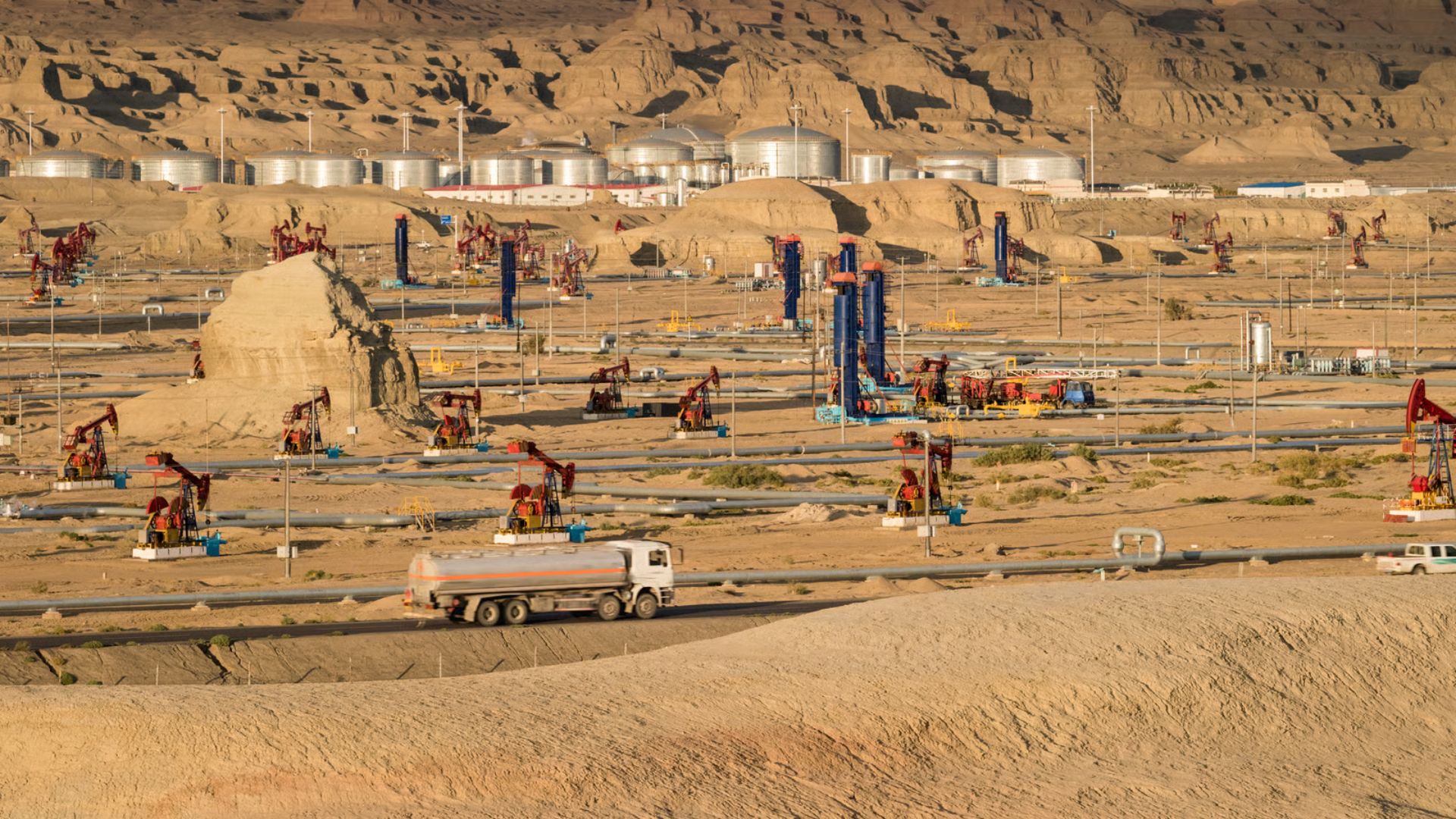







Myanmar’s Ministry of Electricity and Energy issued an open invitation for international firms to carry out exploration, drilling, and production of onshore and offshore oil and natural gas, according to state media reporting on April 13, 2026. The call comes as Myanmar operates under fuel rationing and rotating power outages driven by the Strait of Hormuz disruption, and arrives in a political and investment environment shaped by ongoing civil conflict and international sanctions imposed following the 2021 military takeover.
Key Facts At A Glance
- Open tender invitation issued by the Ministry of Electricity and Energy, reported April 13, 2026
- Invitation covers onshore and offshore oil and natural gas exploration, drilling, and production
- Myanmar has proven natural gas reserves exceeding 22 trillion cubic feet; major offshore fields include Yadana, Shwe, Yetagun, and Zawtika
- Myanmar imports over 90% of refined fuel products; domestic refineries operate at reduced efficiency
- The country has imposed alternating driving days and rotating power outages as emergency fuel rationing measures since late February 2026
- Foreign participation in Myanmar’s upstream sector historically occurs through production sharing contracts with Myanma Oil and Gas Enterprise
- Foreign capital in joint ventures for oil and gas exploration is capped at 80% under existing regulations
- Several Western energy companies have withdrawn or suspended Myanmar operations since the 2021 military takeover
- Natural gas exports to Thailand and China remain Myanmar’s largest source of foreign currency
- Publicly available details on specific blocks, timelines, or tender terms remain limited as of the date of this report
The Tender Call In Context
Myanmar’s Ministry of Electricity and Energy administers upstream oil and gas activity through the Myanma Oil and Gas Enterprise, which serves as the counterparty for all production sharing contracts with foreign investors. The ministry’s Oil and Gas Planning Department is jointly responsible with MOGE for tendering onshore, shallow-water offshore, and deep-water offshore blocks, and for managing exploration and production contracts. The April 13 invitation, reported by state media the Global New Light of Myanmar and carried by BERNAMA, was described as covering both onshore and offshore blocks and directed at international companies.
The structural mechanism for foreign participation in Myanmar’s upstream sector requires joint venture arrangements with MOGE. Under existing investment regulations, foreign capital may not exceed 80% of the total capital of joint ventures engaged in exploration — a restriction that does not apply to joint ventures between foreign investors and the state directly. Production sharing contracts have historically been the primary instrument used to structure exploration rights and cost recovery arrangements.
Myanmar’s upstream sector has experienced a material contraction in foreign participation since the military’s seizure of power in February 2021. Several major Western energy companies, including TotalEnergies, which had been a foundational operator in the Yadana gas field for decades, exited Myanmar operations following the coup and subsequent international sanctions. The US State Department issued a Business Advisory in January 2022 warning that companies with exposure to Myanmar state-owned enterprises face significant reputational, financial, and legal risks. That context remains operative and directly affects the universe of international firms that would consider responding to the Ministry’s call.
Myanmar’s Fuel And Power Position
The timing of the tender invitation coincides with one of the most acute fuel supply emergencies in Myanmar’s recent history. The country imports more than 90% of its refined petroleum products, sourcing them primarily through Thailand, Vietnam, and Singapore. It has no meaningful domestic refining capacity relative to demand. Since the Strait of Hormuz closure in late February 2026, Thailand — Myanmar’s principal fuel supplier — has restricted petroleum exports as a domestic conservation measure, though some bilateral energy cooperation arrangements have been maintained. Myanmar’s military administration responded with alternating driving day rationing for private vehicles and rotating electricity outages across multiple regions.
Myanmar’s own oil and gas production contributes to regional energy supply primarily through pipeline exports. The Yadana and Zawtika fields export natural gas to Thailand via sub-sea and onshore pipeline infrastructure, while the Myanmar-China oil and gas pipeline transports gas from offshore Rakhine Basin fields eastward to Yunnan Province. These export revenues remain among the junta’s primary sources of foreign exchange, which civil society organizations including Justice For Myanmar have documented as directly funding military operations.
Investment Barriers And Geopolitical Complexity
Any international response to the April 13 tender will be constrained by Myanmar’s investment climate. Western energy companies are largely absent from the market, and those still present operate under heightened compliance scrutiny. The firms most likely to respond to an open tender in the current environment are regional operators and companies from countries not participating in Western sanction frameworks — primarily from China, Thailand, India, and Russia, which have maintained or expanded commercial engagement with the military administration.
Myanmar’s offshore basins — particularly in the Andaman Sea and Bay of Bengal — are considered underexplored relative to their geological potential. The country was one of Asia’s first oil producers, with commercial extraction dating to the 19th century, and its offshore geology is contiguous with productive basins in neighboring countries. Whether the current tender invitation will attract substantive interest given the combined barriers of political risk, sanctions exposure, civil conflict, and infrastructure constraints is not determinable from the publicly available sourcing on this development.